In January, Nikon sued Viltrox in China, claiming the lens maker had violated its highbrow belongings for the Z-mount and sought royalties and damages. However this previous summer time, that courtroom disagreed and dominated in choose of Viltrox. This units a significant precedent that might simply have an effect on Canon, the landlord of the one actually closed mirrorless digital camera mount.
The query then turns into, if Nikon’s Z-mount patent is invalid, what makes Canon’s RF-mount any other? To respond to that query, we need to first have a look at why Nikon misplaced to Viltrox.
Writer’s word: The criminal data and the critiques drawn from them had been knowledgeable via a dialog with a longtime patent legal professional who requested to stay nameless.
Nikon’s Loss
The China Nationwide Highbrow Assets Management (CNIPA) noticed Nikon’s argument and no longer most effective disagreed that Viltrox owed it anything else, but it surely additionally invalidated one in all Nikon’s core Z-mount design patents. That patent lined explicit sides of the Z-mount’s bodily bayonet tabs, terminal pins, and digital structure.
The CNIPA dominated that Nikon’s patent lacked an “creative step” (which is the Chinese language criminal an identical to the U.S. phraseology of “non-obviousness”) and, additional, decided that making minor changes to the period, perspective, and association of bayonet lugs or terminal pins over current digital camera mounts was once a regimen engineering selection reasonably than a patentable step forward.

Although the bodily dimensions and places of electronics within the Z-mount are other than Nikon’s F-mount, the courtroom decided that those adjustments (like the scale of the bayonet or the quantity or location of pins) aren’t distinctive, particular, or creative and, due to this fact, can’t be patented.
Since the lawsuit’s core declare depended solely at the validity of Nikon’s patent, Viltrox’s courtroom win successfully stripped Nikon of the criminal foundation required to pursue damages. Nikon can not, legally, forestall Viltrox or any third-party lens producer in China from making autofocus-equipped lenses for the Z-mount and promoting them.
“Out of recognize for the judicial machine, we can chorus from offering additional main points right now,” Nikon tells PetaPixel.
For what it’s price, Viltrox isn’t willing to brag in this victory and has opted to carry its tongue.
“We actually admire your consideration and strengthen. On the other hand, at this second, we don’t have any legitimate data or updates that we’re in a position to percentage referring to this matter. In regards to the questions on possible long term implications or different mounts, we sadly don’t have any feedback or data to be had right now. If there are any legitimate updates at some point that may be shared publicly, we can you should definitely stay you knowledgeable.” -Viltrox
What About Different Areas?
Nikon most effective misplaced this lawsuit in China, this means that in another areas the place it holds a Z-mount patent — akin to in the USA or Europe — it would sue to dam the distribution and sale of offending Viltrox lenses.
Nevertheless it more than likely gained’t.
Nikon is most probably spooked via this loss, so they may really feel like suing in different areas carries an excessive amount of chance now. What in the event that they had been to lose in Europe or the USA? The issues it now faces would compound.
Granted, the Chinese language criminal machine is extraordinarily political and there’s a sense that it may be tough to get a good ruling there, particularly between a overseas corporate and a home one, which is what came about right here. It’s, due to this fact, no longer a really perfect instance for an even-handed research of patent. So, it’s cheap to mention that Viltrox’s win in China doesn’t have a lot of a touching on how every other courtroom would rule at the identical matter.
Nonetheless, Viltrox would most probably use the criminal arguments that had been victorious in China in the ones overseas courts. Whilst China’s courts are moderately protecting in their home firms, that doesn’t imply that the conclusions the courtroom drew wouldn’t even be drawn via different world courts.
The reliance of Nikon’s patent on earlier mount design is the issue. A “new mount” needs to be actually new with a purpose to be patentable. Cameras and the way they mount lenses have modified little or no within the closing 60 years. Simply since the mount is a fairly wider circle is not likely to be sufficient if challenged in courtroom. Iteration is more than likely now not protectable and simply because Nikon was once granted the patent doesn’t imply it could get up to the scrutiny of a courtroom case, even out of doors of China.

Mainly, suing Viltrox the world over has a quite prime chance of invalidating Nikon’s Z-mount patent globally. I simply don’t suppose this can be a chance Nikon is prepared to take.
On peak of that, successful that patent struggle within the U.S. or Europe wouldn’t even essentially imply Nikon would effectively save you the sale of Viltrox lenses. China has already dominated that Viltrox can stay making the lenses, which can be manufactured in China, so Nikon would theoretically most effective be capable to block direct shipments to legitimate retail channels in different markets. However there are a couple of different ways to circumvent those conventional import controls — simply have a look at the DJI Pocket 4P. It’s formally banned in the USA, but it surely’s quite simple to procure one.
Plus, in China, the second one biggest digital camera marketplace on the earth, there would proceed to be no criminal restrictions.
All of this brings us again to the unique query: if Nikon’s Z-mount patent is invalid, what makes Canon’s RF-mount any other?
Canon’s Conundrum
Nikon isn’t the primary digital camera emblem to problem a China-based lens producer for violating its highbrow belongings, but it surely was once the primary corporate to in truth do something positive about it. Previous to this, Canon was once the 300-pound gorilla within the room, and it used that weight to easily threaten lens makers.
Again in 2022, Viltrox mentioned that it stopped making and promoting autofocus-equipped, RF-mount lenses as it was once threatened with criminal motion via Canon. A few weeks later, Canon showed that it was once doing this.
“SHENZHEN JUEYING TECHNOLOGY CO.LTD, manufactures auto center of attention lenses for Canon RF mount below the logo identify “Viltrox”. Canon believes that those merchandise infringe their patent and design rights and has due to this fact asked the corporate to forestall all actions that infringe Canon’s highbrow belongings rights.”
4 years in the past, Viltrox was once smaller, weaker, and poorer. That, and Canon didn’t in truth record a lawsuit; it most effective threatened to. So much has modified since then. Viltrox has truly come into its personal as a lens producer and garnered really extensive recognize amongst photographers. However, extra importantly, this is a way more established, wealthier, and smarter corporate. Viltrox’s victory proves that home lens makers now have the monetary and criminal sources to proactively invalidate digital camera producers’ patents. This dramatically adjustments the ability dynamic within the business.
Whilst we can by no means know, I to find it not likely that Nikon ran immediately to courtroom with its lawsuit. Much more likely, it despatched a equivalent cease-and-desist request to Viltrox that Canon did, however this time Viltrox instructed Nikon to head kick rocks, a call that in the end paid off.
So what occurs now if Viltrox had been to renew making RF-mount lenses? Would Canon make excellent on its risk from 2022 and in truth sue this time?
Canon’s Felony Protections Are Now Shaky
First, let’s have a look at what Canon in particular patented in China. Linking at once to them isn’t imaginable, however they’re indexed at the CNIPA Patent Seek Device. Canon’s design and application patents patent reads moderately in a similar way to Nikon’s and canopy two primary spaces: the three-tab bayonet mount (and its precise dimensions) in addition to the bodily interface, which can be 12 digital contacts. It’s application patents additional quilt the algorithms and indicators which might be transmitted between the lens and digital camera frame and the corporate’s highbrow belongings over how the digital camera regulate autofocus, optical symbol stabilization, and enter from Canon’s Regulate ring.
In abstract, Canon’s criminal RF mount coverage is based closely on patents masking the bodily digital connection and bayonet construction. The imaginable downside for Canon is that the CNIPA’s reasoning within the Nikon case units a transparent administrative precedent in China: bodily flange geometries and pin preparations derived from prior mount applied sciences (in Canon’s case, EF or EF-M) aren’t novel and, due to this fact, no longer patentable.
If Canon had been to sue and Viltrox had been to take that problem to Chinese language courtroom, it’s extremely most probably that the CNIPA would follow the very same reasoning to the RF-mount that it did to the Z-mount.
What Can Canon and Nikon Do?
Whilst the CNIPA’s ruling most effective at once invalidates Nikon’s explicit Chinese language patent, it uncovered a significant criminal weak spot in how digital camera producers give protection to their closed (or in part closed) lens mounts. There may be now a examined, criminal roadmap to difficult the character of any and all lens mounts, together with Canon RF, Leica L, and Micro 4 Thirds. There are actually tremendously fewer dangers to production and promoting unlicensed third-party lenses for any mirrorless machine in China.
In Nikon’s case, it would imagine firmware blocks on its cameras that will save you using positive lenses via encrypted tool protocols to require a handshake between the lens and the digital camera frame. This could be considerably more cost effective and elevate with it means much less chance than making an attempt patent coverage in different courts, but it surely’s a long way from foolproof.
At the start, tool blocks normally move very poorly with customers. Even if there was once no block in position, Sony took massive on-line warmth when Viltrox lenses didn’t seem to paintings accurately all through the a7 V release window, with some going as far as to accuse Sony of deliberately blockading Viltrox despite the fact that Sony didn’t do this.
Secondly, and comparable, there’s no be sure that third-party lens makers couldn’t simply bypass any tool blocks a digital camera emblem places in position by way of its personal firmware updates. It most effective took Viltrox a couple of week to mend the problem with the a7 V, as an example.
Previous I posed the query: Would Canon make excellent on its risk from 2022 and in truth sue this time? I believe the solution is sure, however it could be way more competitive. I believe Canon would concurrently sue Viltrox in China, Japan, the USA, and any place else that Viltrox was once delivery its offending lenses with the function of overwhelming Viltrox with a world criminal struggle.
Canon would do that realizing that it could very most probably lose in China, however that can suggested Viltrox to return to the desk and talk about a agreement out of doors of courtroom. In the event you upload sufficient power in a couple of international locations concurrently, it has a tendency to advertise a cheap industry deal, the place Viltrox would pay some roughly royalty or rate to provide RF-mount lenses.
In truth, that sounds beautiful nice. That’s the result everybody sought after all alongside.
All of this most effective occurs if Viltrox, or another Chinese language third-party lens producer, makes a decision to take that first step and resume RF-mount lens manufacturing. But when any of them come to a decision this battle is worthwhile, Canon may have to return to phrases with the inevitable: its mount can not stay closed.
On this imaginable long term, Canon would most probably institute a program and machine very similar to the only Sony has for E-mount: turn out to be an legitimate spouse of the mount, acquire get entry to to Canon engineers, and possibly take a success to most body charge in footage (Sony caps third-party lens efficiency to fifteen frames according to 2d). The one distinction could be Canon would most probably call for a licensing rate.
Whilst they’re competition, Canon would not likely wish to see its fellow Japan-based manufacturers Sigma and Tamron lose out to producers in China. All of them take a seat at the identical CIPA board and they all would make a selection to paintings in the most productive hobby of keeping up the luck of Eastern-owned companies when confronted with this world risk. So, if Chinese language manufacturers pressure Canon’s hand, it kind of feels not likely that the mount wouldn’t open in some capability around the board.
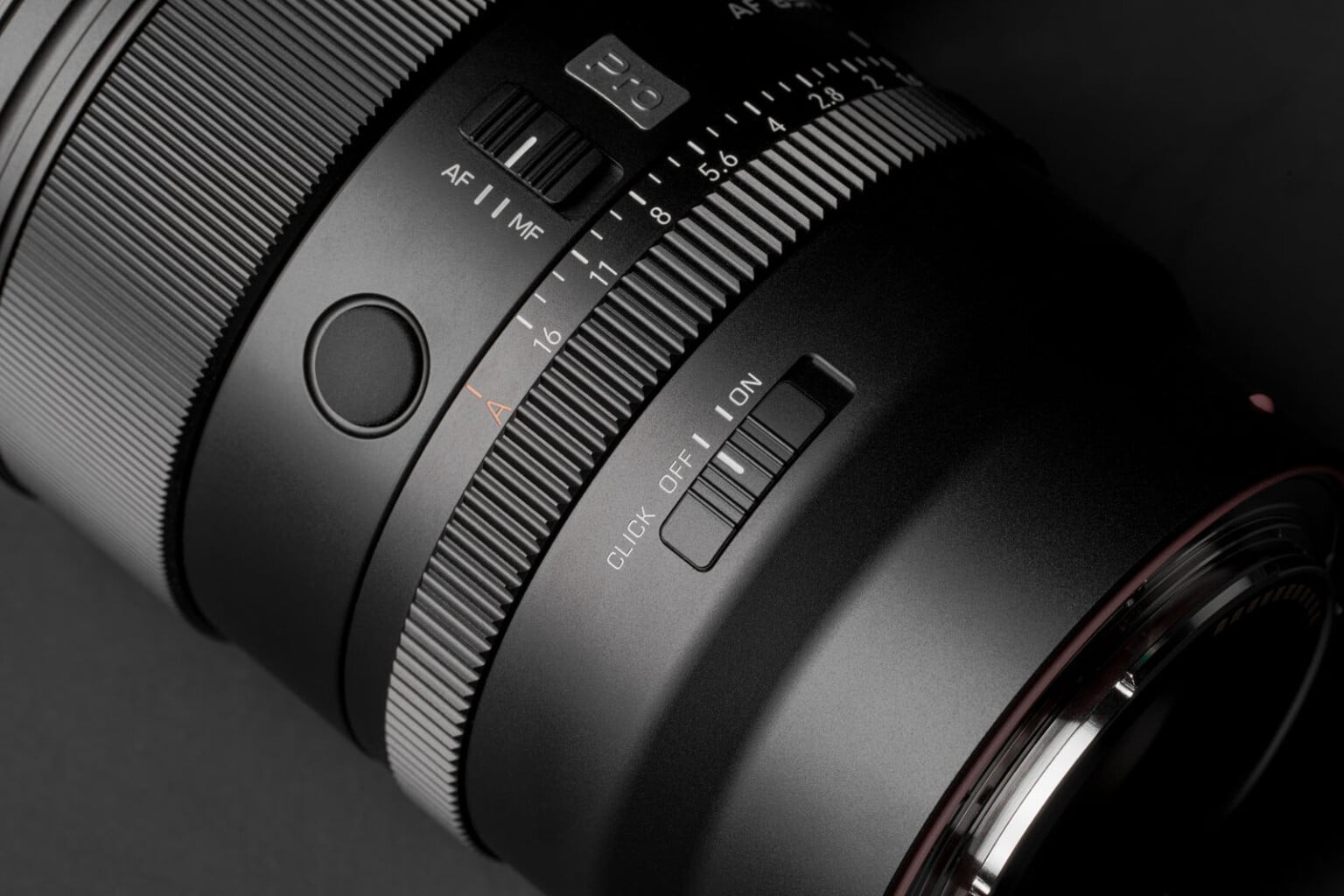
We requested Canon about all this, and the reaction was once anticipated.
“Canon does no longer touch upon criminal court cases or the industry actions of alternative firms. We stay keen on turning in leading edge answers to our consumers whilst respecting highbrow belongings rights in each marketplace the place we function,” it tells PetaPixel.
I to find it very arduous to imagine the corporate isn’t fascinated with all this, although. It will have to be a top-of-mind inside dialogue. All it could take is for any probably the most Chinese language lens producers to renew RF-mount lens manufacturing and get started making the ones lenses to be had. At that time, the proverbial boulder could be rolling down the hill.
All of that is with out even taking into consideration the huge and very robust gross sales area this is China. Even supposing all of those 1/3 occasion lens makers most effective offered their lenses in China, that will imply digital camera manufacturers dropping regulate over the second one biggest gross sales area on the earth. They can not forget about that.
For the primary time on this era, the ability lies within the palms of third-party lens makers — for higher or for worse.
Associate Disclosure PetaPixel articles might come with associate hyperlinks; we might earn a fee if you are going to buy via one.