
In Nationwide Geographic‘s newest documentary, “Ghost Elephants,” acclaimed director Werner Herzog follows Nationwide Geographic Explorer and conservation biologist, Dr. Steve Boyes, on the most recent bankruptcy of his decade-long adventure into the wooded area highlands of Angola to search out near-mythical “ghost elephants.”
Spoiler Caution: This tale discusses key moments from the Nationwide Geographic documentary, “Ghost Elephants,” directed by way of Werner Herzog. The documentary premieres on March 7.
Joined by way of a trio of KhoiSan grasp trackers from Southern Africa, Xui, Xui Dawid, and Kobus, Boyes and fellow Nationwide Geographic Explorer Kerllen Costa make a protracted, bad trek from southern Africa to Angola, seeing echoes of its war-torn previous alongside the way in which, together with outdated deserted tanks and scarred lands.
One of the crucial maximum notable proof of Angola’s horrific, 26-year civil battle (1975-2002) is the ghost elephants themselves, or, moderately, their elusiveness. The Angolan Civil Conflict was once no longer simply fatal for Angola’s folks — it’s estimated that the battle took 800,000 lives immediately and uprooted 4 million extra — it was once fatal for Angola’s various natural world. As Nationwide Geographic studies, it was once estimated within the Nineteen Eighties that as many as 100,000 elephants had already been slaughtered for his or her ivory to assist fund battle efforts. By way of 2015, an expansive survey discovered simply 4,000 elephants left in southeast Angola.
All animals deserve admire, coverage, and the power to are living a herbal existence. On the other hand, even nonetheless, elephants are a specifically particular animal. The Angolan Civil Conflict affected them, too. Past the demise and destruction, elephants are delicate to threat and pressure. They’re sensible animals, and their recognition for steel-trap reminiscences is easily earned. Folks did terrible issues to elephants throughout the Angolan Civil Conflict, and the elephants that stay in southeast Angola have no longer forgotten.
Taking flight to far flung, moderately populated wooded area highlands, the ghost elephants Boyes has been looking for since Angola reopened after the battle are extraordinarily tough to search out. Boyes has been there again and again, by no means sooner than getting a firsthand glimpse of a ghost elephant, however getting slightly nearer every time. More energizing dung, brisker tracks, extra proof that he had simply overlooked an elephant, trailing it by way of hours, or now and again, mins.
Those so-called ghost elephants have each and every proper to be cagey, however Boyes believes it is important to rebuild the consider between folks and pachyderm. Because the documentary presentations, the historical past and cultural tales of folks and elephants are carefully intertwined amongst a lot of tribes in Africa. A few of them, just like the Luchazi folks, hint their origins again immediately to elephants. The relationship between human and elephant is sacred — it issues deeply.
For Boyes, a seasoned conservation biologist, the ghost elephants are specifically attention-grabbing. He has lengthy believed that those elephants are particular, other from the remaining. Dwelling at an elevation of four,000 toes, the Angolan highlands don’t seem to be an ordinary habitat for elephants. The elephants most commonly transfer at evening or in twilight, which Boyes thinks is on account of the generations of violence they’ve skilled. And in all probability most enjoyable of all, the ghost elephants are large. Boyes has lengthy believed the ghost elephants in Angola are direct descendants of the biggest land mammal ever recorded: “Henry,” a 12-ton, 14-foot-tall African Elephant specimen that was once hunted by way of a Hungarian recreation hunter in Angola within the Nineteen Fifties.

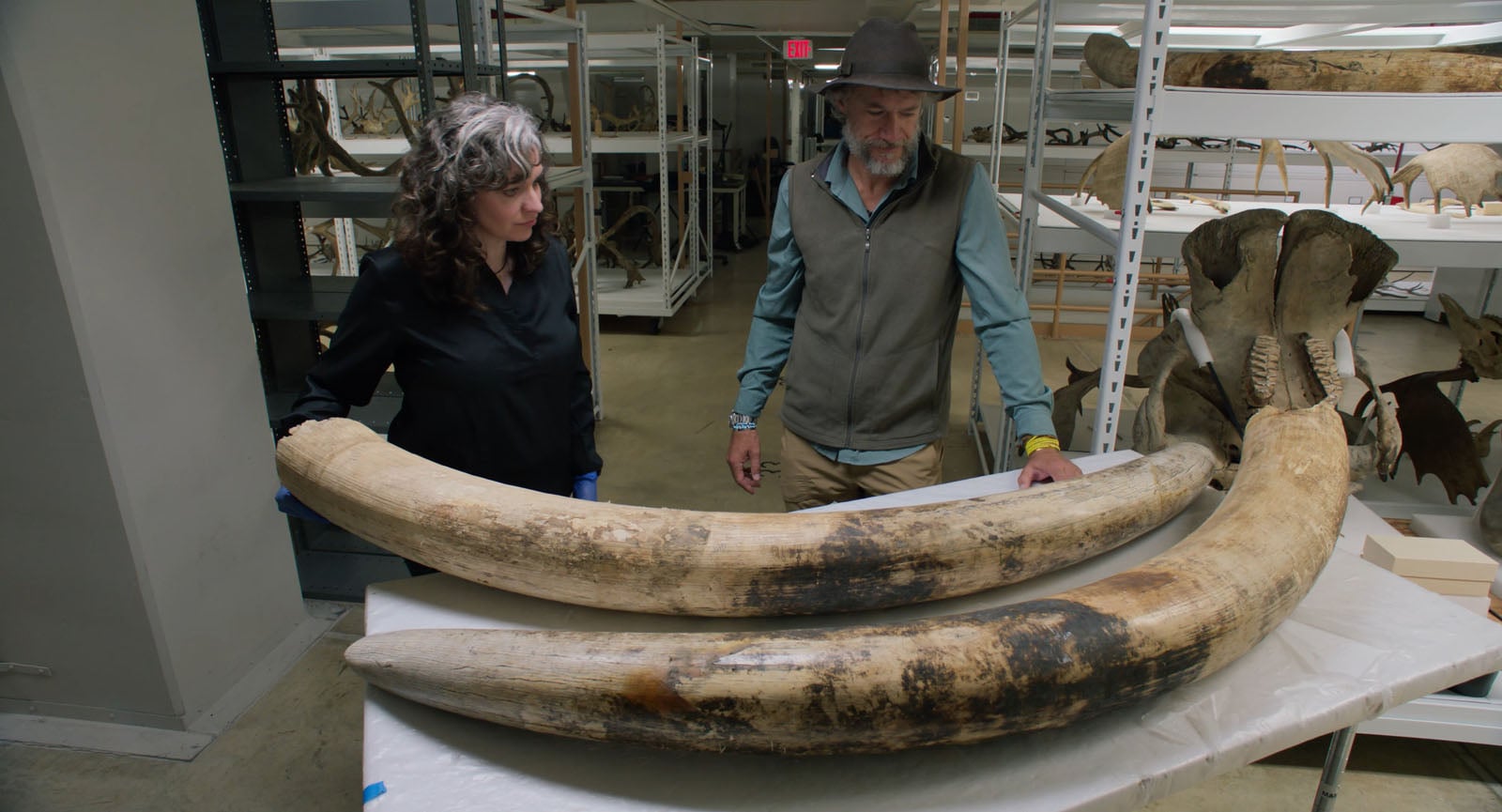

Boyes’ resolution not to most effective in spite of everything apply those ghost elephants but additionally to discover their attainable connection to Henry is on complete show in Herzog’s “Ghost Elephants.”

It could possibly, every now and then, really feel as regardless that Boyes, Xui, Xui Dawid, and Kobus won’t ever in finding what they’re in search of. Nevertheless it’s no longer like those elephants don’t exist; the proof is correct there. Footprints, dung, and little hairs caught within the bark of bushes. Those are all in moderation amassed in order that the samples can go through in depth genetic trying out in america. There are elephants, that a lot has been transparent to Boyes for years, despite the fact that some folks doubted him.
However Boyes had by no means observed them along with his personal eyes, one thing that he wasn’t ever that troubled by way of. Boyes cares deeply in regards to the elephants and has devoted a lot of his existence to learning them, however turns out to have 0 trust that he’s entitled to the rest or that he merits to in spite of everything lay his personal eyes at the animals he’s been following for years.

However then, when out looking with Xui, there it was once. After all. A huge ghost elephant, simply off within the distance. Boyes temporarily were given his telephone out and captured some moderately spectacular pictures, which Nat Geo sadly didn’t provide for press. Xui attempted to extract a tissue pattern with knowledgeable arrow — this do not have harmed the elephant — but it surely deflected. Then the elephant took off. They tracked it for hours, however by no means stuck as much as it once more sooner than calling it quits.


Later that day, Boyes is explaining what took place to Herzog, and the rains come, and rainbows seem. The instant may actually no longer were scripted higher, but it surely wasn’t scripted. This was once simply actual magic.
“We’ve been available in the market for months and we’ve been monitoring the elephants. We’re getting inside an hour, two hours, an afternoon,” Boyes tells PetaPixel. “There’s an entire mythology round them. Whilst you’re in camp, in our seek camp, you’re no longer allowed to discuss the place you’re going the next day to come, who you’re going with, or whilst you’re going, for the reason that elephants are listening.”
Boyes made that mistake at the first day of this new seek expedition, pronouncing the place anyone was once going.
“I used to be banned from strolling for 2 days and I were given in reality disappointed. I went and camped clear of the workforce, sat underneath the celebrities, sulking.”

“That’s the surroundings you’re in, deep custom, deep tradition, quite a lot of taboo. And we seek and we seek and we seek. It’s 40 miles an afternoon.”
“That’s the remaining day once I stroll into the elephant, the very ultimate day. I’d surrendered the day sooner than, in reality. We’d observed the pictures from Antonio and Elias, and I used to be like, ‘Ok, we’ve were given that.’”
Boyes idea it was once inconceivable that the general day could be a a hit one.

However Xui had observed the video from two different workforce individuals, which confirmed a ghost elephant a ways within the distance, most commonly obscured by way of bushes. It wasn’t a lot, but it surely was once the entirety in the beginning. It was once all that they had. Boyes idea Xui was once invigorated by way of it.
“I realized he was once very practical that [final] morning,” Boyes says. “I believe he had simply sufficient of a feel and appear of the bushes and where for him to learn into it. The grasp trackers know the names and birthdays of each and every unmarried elephant available in the market with no need observed one. They know each and every different animal, each and every corner and cranny of this position has been memorized. He was once very practical.”
After a couple of hours, Xui stated, “Steve, Steve, over there.”
And there it was once.
When attempting to give an explanation for what took place to the workforce after his go back, Boyes discovered it very tough to mention a lot of the rest in any respect.


“I take the video to Kerllen and display it to him, no longer speaking to them. I simply display him the video and a number of folks come round. I cried just a little bit and I used to be sitting there.”
“I used to be looking to devour. I used to be very hungry, however I couldn’t communicate in reality. And I’ve were given the movie workforce that freaking sticking the cameras in my face. It’s no longer at the movie, however they’re proper there the entire time. And I’m simply consuming rice and beans, chilly rice and beans. After which I went and sat within the rain. And I don’t know if any rainbow seems. It’s like, what on Earth is that this then? So I’m going and have a look at that. Nevertheless it’s like good fortune or one thing, really well timed. I used to be utterly beaten by way of it. It’s 10 years of time, mountain cycling, climbing for months, exploring each and every unmarried river.”
Experiencing that second additionally pertains to how Boyes approaches natural world conservation at its very core. He and his workforce are concerned with the local community, tribes, vice kings, and kings. They spend time there, development faculties and clinics, coaching academics, nurses, and midwives. They have got hundreds of farmers operating with them, serving to rebuild a area that was once destroyed by way of battle.


For Boyes, that is the way you offer protection to animals, position, and folks, from the ground up. Environmental problems can’t be solved by way of merely throwing cash at them or erecting fences and partitions to offer protection to a particular space. A success, long-term conservation calls for being there, at the floor, operating with the individuals who are living there.
Boyes and his workforce are serving to to reinforce long term generations of guardians, and, confidently, the ghost elephants will be capable to thrive. In all probability sooner or later they’ll even consider folks once more, and let’s hope that consider, if it returns, isn’t once more damaged.


“I don’t wish to see one once more,” Boyes tells PetaPixel. “That was once a present, and it most effective must occur as soon as. I don’t be expecting it to occur once more. However you’ll be able to really feel the elephants there. You’ll be able to really feel the elephants granting us get admission to.”
In the end, “Ghost Elephants” isn’t rather a movie in regards to the elephants themselves. It’s no longer even in reality about Boyes. The film is set what ghost elephants, and what took place to them, tells us about ourselves. The ghost elephants are a large, elusive reflect that displays humanity’s worst, but additionally its attainable to be higher. This can be a poignant, superbly filmed film this is neatly price observing.
“Ghost Elephants” premieres on Nat Geo at 9 PM ET (6 PM PT) on March 7.

Boyes has additionally written an accompanying ebook, “Okavango and the Supply of Existence,” which options Boyes’ accounts of his adventures, explorations, historical past in Africa, and strategy to conservation. There may be a very good bankruptcy devoted simply to the ghost elephants. The ebook is to be had now.
Symbol credit: Nationwide Geographic. Particular person photographers are credited within the captions.