The Movement Image Manufacturing Code, extra usually known as the Hays Code, was once one of the influential forces shaping Hollywood’s Golden Age. Created to uphold ethical requirements in cinema, the Code ruled what may and may no longer be proven on display for over 3 many years. But, as restrictive because it was once, resistance to its regulations surfaced even from throughout the trade itself.
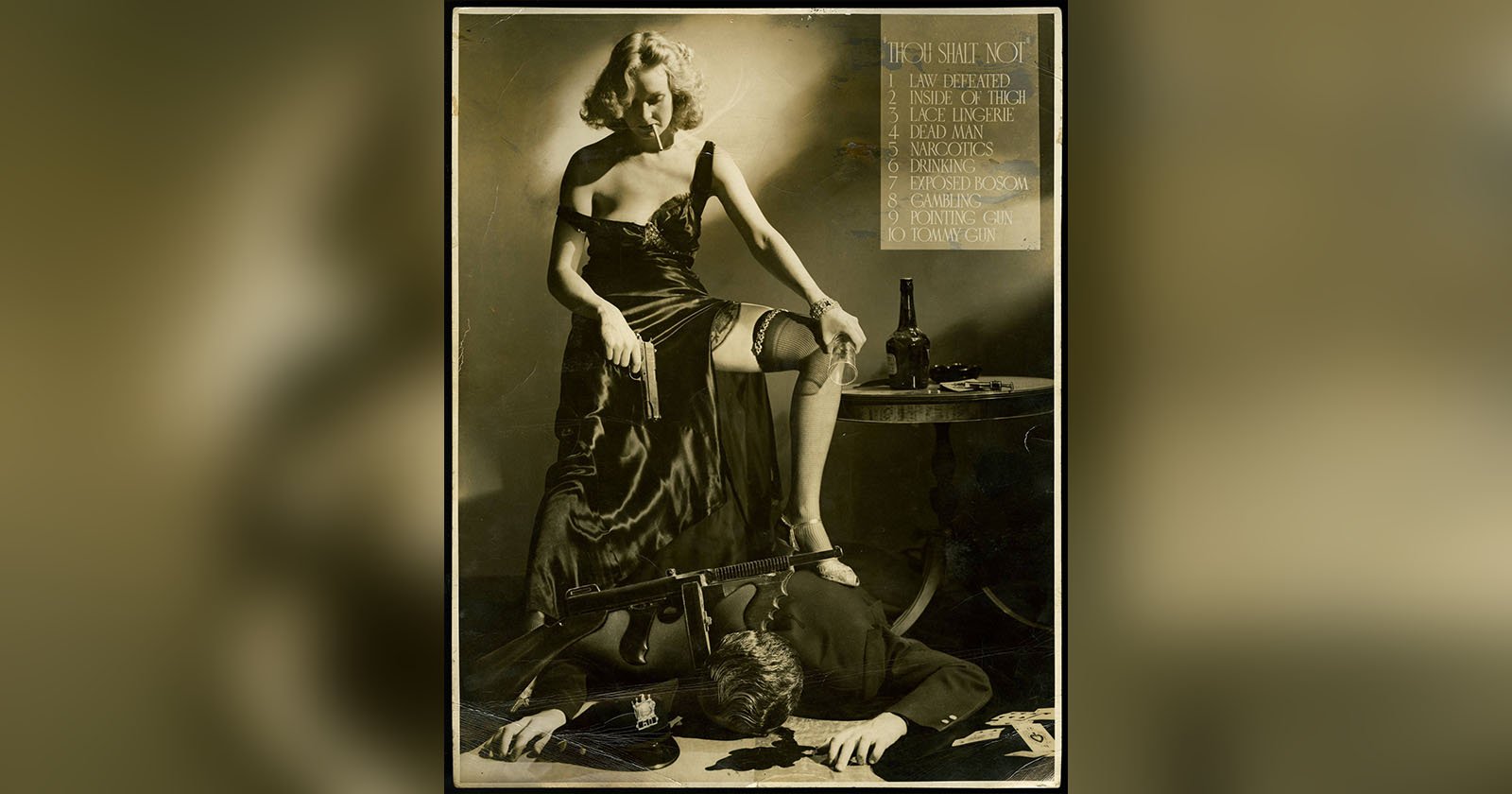
One hanging instance of this defiance got here within the type of Thou Shalt No longer, a 1940 {photograph} by way of Whitey Schafer that playfully however provocatively mocked Hollywood’s strict censorship tips. This act of subversion encapsulated the rising frustrations of filmmakers and artists who felt stifled by way of the inflexible ethical framework imposed upon them.
The Origins of the Hays Code
Within the early twentieth century, as cinema advanced into a significant cultural drive, its expanding affect alarmed conservative segments of American society. Silent motion pictures reminiscent of The Beginning of a Country (1915) and The Sheik (1921) demonstrated the medium’s energy to form public attitudes, whilst the rising acclaim for talkies (motion pictures with discussion) within the overdue Twenties additional expanded Hollywood’s achieve. On the other hand, the trade’s fast expansion was once no longer with out controversy.
Hollywood stars was icons of the Roaring Nineteen Twenties, however their offscreen lives from time to time drew extra consideration than their motion pictures. The scandals of the Twenties, such because the trial of Roscoe “Fatty” Arbuckle for manslaughter and allegations of homicide surrounding the loss of life of director William Desmond Taylor, tarnished the trade’s recognition. On the identical time, motion pictures started pushing ethical limitations, that includes provocative topics reminiscent of infidelity, crime, and sexual liberation. Those trends provoked a backlash from spiritual teams, ladies’s organizations, and politicians, who accused Hollywood of corrupting public morals and demanded stricter oversight of its content material.
Fearing executive intervention, the movie trade moved to control itself. In 1922, the Movement Image Manufacturers and Vendors of The united states (MPPDA) was once established below the management of Will H. Hays, a former Postmaster Common with ties to the Presbyterian Church. Tasked with cleansing up Hollywood’s symbol, Hays sought to preempt censorship by way of developing a collection of ethical tips for filmmakers. The end result was once the Movement Image Manufacturing Code — often referred to as the Hays Code — drafted in 1930 by way of Catholic layman Martin Quigley and Jesuit priest Father Daniel Lord.
The Code defined explicit regulations about what may and may no longer seem in motion pictures, emphasizing upholding Christian values and selling sure messages. Amongst its prohibitions have been depictions of profanity, nudity, sexual relationships outdoor of marriage, drug use, and felony habits that went unpunished. On the other hand, all over its first few years, the Code was once in large part unnoticed. Hollywood studios endured generating motion pictures with provocative or risqué content material, leading to what’s now referred to as the “pre-Code period.”
The Pre-Code Technology and the Turning Level of 1934
From 1930 to 1934, Hollywood operated with minimum enforcement of the Manufacturing Code. This era noticed the discharge of one of the maximum bold motion pictures of the early sound period. Motion pictures like Crimson-Headed Lady (1932), starring Jean Harlow as a crafty seductress, and Child Face (1933), wherein Barbara Stanwyck’s persona manipulates males via her sexuality, challenged conventional notions of morality. Filmmakers explored taboo topics reminiscent of adultery, abortion, and the exploitation of girls, incessantly portraying those topics with startling frankness.
On the other hand, the permissiveness of the pre-Code period was once short-lived. Non secular teams, specifically the Catholic Church, was increasingly more vocal of their condemnation of Hollywood. In 1934, the Nationwide Legion of Decency (often referred to as the Catholic League of Decency) was once shaped, organizing boycotts towards motion pictures deemed morally objectionable. Those boycotts proved to be extremely efficient, threatening the studios’ earnings at a time once they have been nonetheless getting better from the Nice Despair.
Below mounting power, the MPPDA established the Manufacturing Code Management (PCA) to implement the Code with larger rigor. The PCA, led by way of religious Catholic Joseph Breen, may approve or reject motion pictures in line with their adherence to the Code’s regulations. Studios temporarily fell in line, as freeing a movie with out PCA approval risked alienating theaters and audiences. The period of strict censorship had begun.
The Strictures of the Hays Code
Below Breen’s watchful eye, the Hays Code was a inflexible gadget of ethical oversight that ruled just about each facet of Hollywood storytelling. The Code was once revised a lot of instances through the years, but it surely rigidly adhered to 3 basic ideas:
- “No image will probably be produced which is able to decrease the ethical requirements of those that see it. Therefore the sympathy of the target market shall by no means be thrown to the facet of crime, wrongdoing, evil, or sin.”
- “Right kind requirements of lifestyles, matter simplest to the necessities of drama and leisure, will probably be introduced.”
- “Regulation, herbal or human, shall no longer be ridiculed, nor shall sympathy be created for its violation.”
The Code additionally incorporated lists of phrases that might by no means be uttered in discussion and moderately defined how filmmakers may depict positive topics. For instance, “over the top and lustful kissing” and “intercourse relationships between the white and black races” have been strictly forbidden. In some instances, the Code did permit the depiction of immoral habits, however provided that the movie obviously condemned it.
Filmmakers incessantly discovered those restrictions suffocating. Tales needed to be moderately built to keep away from specific violations of the Code, resulting in sanitized depictions of human relationships and morality. In some instances, pre-Code motion pictures have been even remade so as to abide by way of the brand new regulations. The now-classic John Huston (who would in finding himself clashing with Hollywood right through his occupation) masterpiece The Maltese Falcon starring Humphrey Bogart — in line with the 1931 movie of the similar identify — was once one such movie.
On the identical time, those obstacles impressed a brand new roughly creativity, as administrators discovered creative tactics to signify grownup topics with out immediately portraying them. Double entendres, visible metaphors, and subtext was equipment of the business, permitting filmmakers to slide debatable concepts previous the studio censors.
Thou Shalt No longer: A Daring Act of Satire
Via 1940, the Hays Code was once firmly entrenched, and Hollywood’s artists have been keenly acutely aware of its have an effect on on their paintings. Whilst some discovered tactics to thrive inside of its confines, others expressed their frustration in additional overt tactics. One such determine was once Whitey Schafer, a Hollywood portrait photographer recognized for his playful and leading edge taste.

Schafer’s Thou Shalt No longer emerged as a daring observation of resistance in an trade outlined by way of censorship. The {photograph}, staged with a forged of actors and actresses, introduced a funny but biting critique of the Hays Code’s ethical policing. Within the symbol, Schafer depicted a scene that flagrantly violated the Code’s tips — a intercourse employee smoking a cigarette whilst keeping a gun, a lifeless police officer, and alcohol. The photograph’s identify is a playful jab at religiosity, and the plaque lists ten items banned by way of the Hays Code — once more, an clearly implicit dig on the Code’s deeply spiritual underpinnings.
Whilst Thou Shalt No longer was once created as a satire, its subtext carried a deeper message in regards to the ingenious constraints confronted by way of Hollywood artists. Schafer’s {photograph} encapsulated the strain between artwork and censorship, calling consideration to the absurdity of a gadget that sought to sanitize the human revel in for the sake of public morality.
Cultural Affect and Early Resistance
The Hays Code was once a mirrored image of the conservative social local weather of its time, but it surely additionally contributed to shaping that local weather by way of reinforcing conventional values via cinema. Via sanitizing motion pictures, the Code erased a lot of the complexity and variety of human studies. Subjects reminiscent of racial inequality, LGBTQ+ relationships, and ladies’s autonomy have been in large part absent from mainstream Hollywood all over the Code period, with simplest uncommon exceptions.
But resistance to the Code existed even in its early years. Whilst Schafer’s Thou Shalt No longer introduced a funny critique, filmmakers like Ernst Lubitsch and Alfred Hitchcock advanced subtler tactics to paintings across the restrictions. Lubitsch’s romantic comedies, reminiscent of Ninotchka (1939), trusted innuendo to discover grownup relationships, whilst Hitchcock used visible pressure and implication to trace at taboo topics in motion pictures like Rebecca (1940).

Those acts of defiance, whether or not overt or refined, demonstrated the resilience of artists within the face of censorship. Regardless that the Hays Code had succeeded in stifling many varieties of ingenious expression, it might no longer wholly suppress the human impulse to query, problem, and push limitations.
The Cracks Start to Display: The Decline of the Hays Code
Via the overdue Forties, Hollywood was once dealing with a hastily converting cultural panorama. Global Battle II had left the arena shaken, and the postwar period introduced with it a want for realism and tales that mirrored the complexities of contemporary lifestyles. As the USA entered the Fifties, societal norms have been evolving, and the inflexible framework of the Hays Code started to really feel increasingly more out of date.
On the identical time, Hollywood confronted rising pageant from global cinema. Eu filmmakers weren’t certain by way of the similar restrictions, and their motion pictures incessantly depicted sexuality, violence, and ethical ambiguity with some distance larger frankness. Administrators like Federico Fellini, Ingmar Bergman, and François Truffaut started to draw American audiences longing for one thing other, one thing that felt nearer to their very own lives and struggles. Those motion pictures, which incessantly explored topics deemed taboo by way of the Hays Code, uncovered the restrictions of Hollywood’s self-censorship.

Regionally, resistance to the Code grew more potent. Filmmakers started to check the bounds of what may well be proven on display, incessantly freeing motion pictures with out the PCA’s approval. Otto Preminger was once a few of the first to brazenly defy the Code, freeing motion pictures like The Moon Is Blue (1953) and The Guy with the Golden Arm (1955) regardless of their rejection by way of the PCA. Each motion pictures have been commercially a success, proving audiences have been prepared to embody extra provocative content material.
The Splendid Court docket Steps In

The overall loss of life knell for the Hays Code got here from a sequence of prison battles. In 1952, distributor Joseph Burstyn launched — or tried to liberate — Robert Rosselini’s “anti-Catholic” quick movie The Miracle (the second one episode of a collaboration between Fellini and Rosselini titled L’amore) in New York Town. Protests international condemned the movie as blasphemy, and the New York State Board of Regents declared it “sacrilege” and revoked its license. Burstyn took the problem to court docket, ultimately interesting to the Splendid Court docket, the place he argued that movie is an inventive medium safe by way of the First Modification.

Within the landmark 1952 case Joseph Burstyn, Inc. v. Wilson, the U.S. Splendid Court docket dominated that Hollywood’s censorship was once a “restraint on freedom of speech.” This resolution overturned previous rulings that had excluded motion pictures from loose speech protections, successfully undermining the legitimacy of the Hays Code as a device for regulating content material.

The Court docket — below Leader Justice Fred M. Vinson — declared that the “Miracle Case” was once “the primary to give squarely to [them] the query whether or not movement photos are throughout the ambit of coverage which the First Modification, during the Fourteenth, secures to any type of ‘speech’ or ‘the click.’’’ The Court docket additional held “It can’t be doubted that movement photos are a vital medium for the communique of concepts’’ and films ‘‘would possibly have an effect on public attitudes and behaviour in plenty of tactics, starting from direct espousal of a political or social doctrine to the delicate shaping of idea which characterizes all creative expression. The Court docket additional known films “as an organ of public opinion isn’t lessened by way of the truth that they’re designed to entertain in addition to to tell.” Movement photos, the Court docket decreed, are “a type of expression whose liberty is safeguarded by way of the First Modification.”
Because the Sixties improved, the social upheavals of the Civil Rights Motion, the feminist motion, and the sexual revolution additional eroded the cultural foundations upon which the Hays Code was once constructed. The countercultural ethos of the last decade celebrated rebel, authenticity, and the breaking of taboos — values that have been essentially at odds with the sanitized ethical universe of Code-era Hollywood.
Via 1968, the Hays Code had develop into beside the point. The Movement Image Affiliation of The united states (MPAA), spotting the desire for a brand new gadget, offered the trendy movie ranking gadget (despite the fact that that, too, would go through some changes over the years). The program, which classified motion pictures in line with their suitability for various age teams, allowed filmmakers some distance larger ingenious freedom whilst giving audiences the facility to make knowledgeable viewing possible choices.
The Legacy of Thou Shalt No longer
Looking back, Whitey Schafer’s Thou Shalt No longer seems like a prophecy, a playful but pointed critique of a gadget that might in the end cave in below its personal weight. Whilst the {photograph} was once no longer a broadly publicized act of rebel, it has since won reputation as an emblem of resistance to censorship in Hollywood’s Golden Age.
Thou Shalt No longer holds a singular position within the historical past of Hollywood’s battle with self-censorship. Schafer’s satire captured the absurdity of the Hays Code in some way that phrases on my own may no longer. Via exaggerating the Code’s restrictions and turning them into a visible tick list of “immoral” behaviors, the {photograph} laid naked the contradictions and hypocrisies of a gadget that sought to dictate morality via artwork.
However past its critique of the Hays Code, Thou Shalt No longer additionally serves as a broader observation at the courting between artwork and authority. In any medium, the imposition of strict regulations inevitably creates friction as artists thrust back towards constraints that stifle their creativity. Schafer’s {photograph} reminds us that artwork flourishes on freedom and that makes an attempt to keep an eye on it incessantly encourage acts of rebel as robust as the principles they defy.