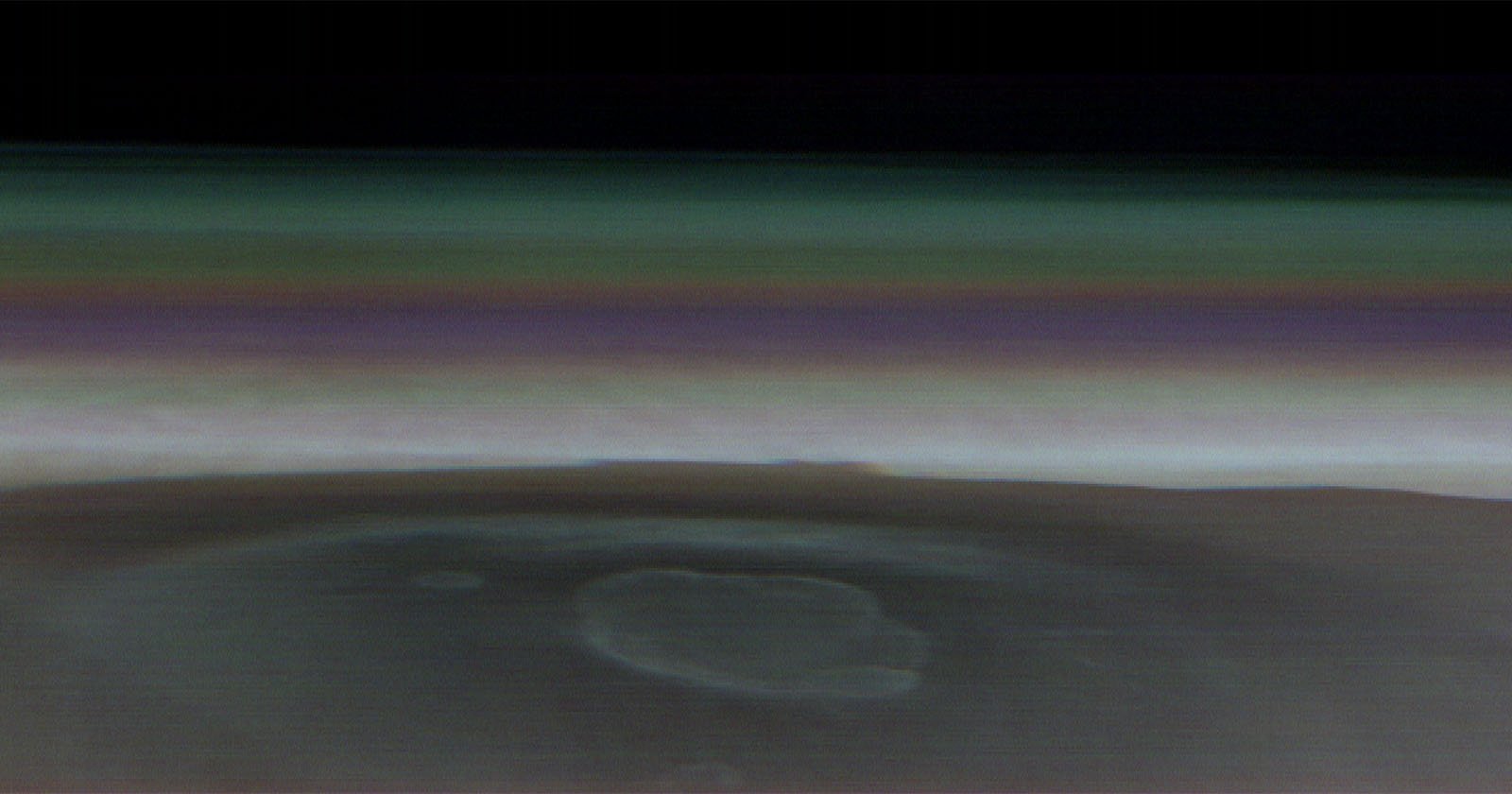
NASA’s 23-year-old Odyssey Mars orbiter is days clear of celebrating a fantastic milestone: 100,000 journeys round Mars. To mark the record-setting instance, NASA has launched a brand new symbol of Olympus Mons, the tallest volcano within the sun device.
For the reason that 2001 Mars Odyssey orbiter reached the Pink Planet’s orbit on October 24, 2001, greater than six months after it introduced from Cape Canaveral, Florida, it’s been mapping Mars, examining minerals and ice on the earth’s floor, and serving to scientists establish doable touchdown spots for long term missions.
NASA’s longest-living Mars robotic has been involved in shooting high-altitude perspectives of Mars in recent times, together with a shocking and strange view of the Martian horizon launched overdue closing yr. The latest symbol, captured on March 11, 2024, and printed these days, is some other have a look at the planet’s horizon. On this case, Olympus Mons is entrance and middle within the foreground, whilst the planet’s complicated, multi-layered surroundings stretches above Mars’ floor. Olympus Mons’ base sprawls simply over 370 miles (600 kilometers), and the volcano’s height is a staggering 17 miles (27 kilometers) above the skin.

Very similar to the standpoint astronauts get of Earth from aboard the Global House Station (ISS), Odyssey’s new aerial panorama picture is helping scientists learn about and be told extra about climate, clouds, and airborne mud at Mars.
“In most cases we see Olympus Mons in slim strips from above, however by means of turning the spacecraft towards the horizon we will see in one symbol how massive it looms over the panorama,” says Odyssey’s challenge scientist, Jeffrey Plaut of NASA’s Jet Propulsion Laboratory. “No longer most effective is the picture impressive, it additionally supplies us with distinctive science information.”
The bluish-white band close to the ground of the ambience hints towards the volume of mud on the location. Scientists assume the purple-colored layer above is this colour on account of crimson mud blending with blueish water-ice clouds. The blue-green layer close to the highest is ready 31 miles (50 kilometers) into the sky above Mars.
Like the picture the Odyssey staff shared closing yr, the brand new one was once shot with the orbiter’s Thermal Emission Imaging Device, or THEMIS.
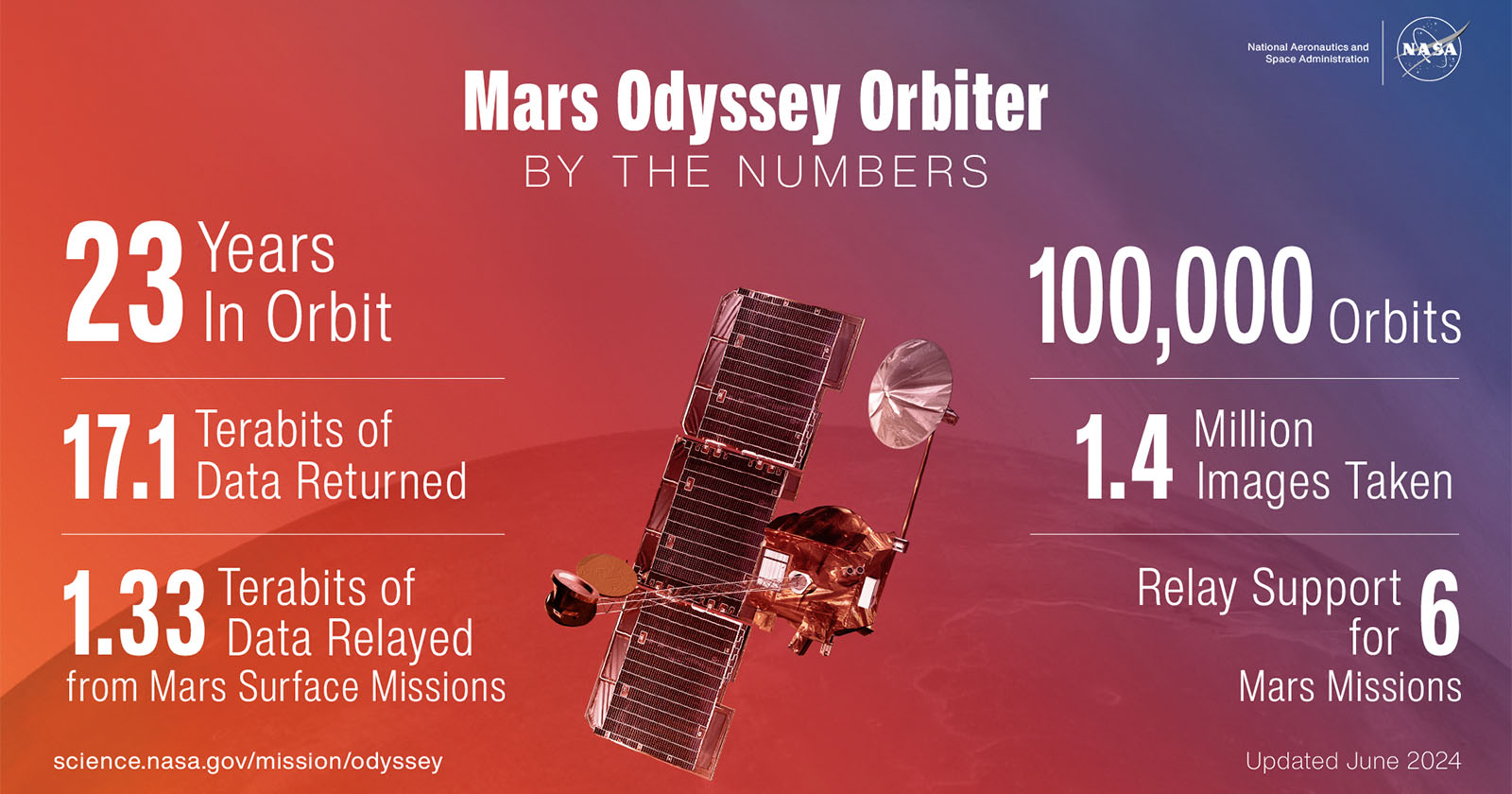
Throughout its 23 years in orbit, Odyssey has despatched 17.1 terabits of knowledge again to Earth and relayed 1.33 terabits of knowledge from surface-based missions on Mars. It has additionally captured 1.4 million pictures and equipped essential reinforce for 6 next Mars missions.
“It takes cautious tracking to stay a challenge going this lengthy whilst keeping up a historic timeline of clinical making plans and execution — and leading edge engineering practices,” remarks Odyssey’s challenge supervisor, Joseph Hunt of JPL. “We’re having a look ahead to accumulating extra nice science within the years forward.”
Symbol credit: NASA/JPL-Caltech/ASU