Within the early Nineteen Nineties, a bunch of scientists had a dream: a brand new form of telescope that will push astronomy, astrophysics, and imaging era additional than ever earlier than. It might be a tool that might see massive swaths of the sky and assist get to the bottom of the thriller of darkish subject. 30 years later, that dream is a fact.
What began as a coarse comic strip took shape over the following decade and in 2003, the LSST Company used to be shaped as a non-profit that will give a boost to the challenge. In 2007, the LSST gained vital monetary backing from Charles Simonyi and Invoice Gates within the type of $20 million and $10 million, respectively, for use to build the telescope’s reflect array.
It used to be at this level that the dream began to really feel “actual” to these concerned.
A Decade-Lengthy Adventure
In 2010, the challenge used to be given federal investment from the Nationwide Science Basis (NSF) and the Division of Power (DOE), and building of the telescope used to be in a position to start underneath the title Huge Synoptic Survey Telescope (LSST).

In 2015, floor used to be damaged in Cerro Pachón, Chile, the place the large telescope housing for the large digicam can be constructed. Over the following couple of years, particular person portions of all the observatory machine, together with the digicam, can be built in several portions of the arena. The development of the digicam started in earnest in California. The metal telescope mount construction got here in combination in Spain. The secondary reflect used to be assembled in New York.
In 2018, the telescope mount and each mirrors got here in combination in Chile. In December 2019, america Congress showed a brand new title for the telescope: the Vera C. Rubin Observatory, named after the pioneering American astronomer who made important contributions to astronomy and astrophysics.

“Rubin Observatory used to be the primary primary, publicly-funded astronomy facility in america to be named after a girl,” the observatory’s staff says.
Whilst the observatory were given a brand new title, the acronym LSST caught and the challenge would proceed with it underneath the title Legacy Survey of House and Time.
Although primary items of the telescope had been being assembled in combination as early as 2018, it might be just about six extra years earlier than what’s arguably crucial facet of the machine — the three,200-megapixel LSST digicam — used to be accomplished. That in spite of everything came about on April 3, 2024.
Massive Doesn’t Even Start to Describe the LSST Digital camera
I and my colleagues Chris Niccolls and Jordan Drake got the fantastic alternative to consult with the Stanford Linear Accelerator Middle (SLAC), the place the now-completed LSST digicam has been for the decade. Earlier than it’s packed up and moderately shipped to Chile, the 3 people had been in a position to spend a couple of hours with it along two of the engineers who had been a part of its building.
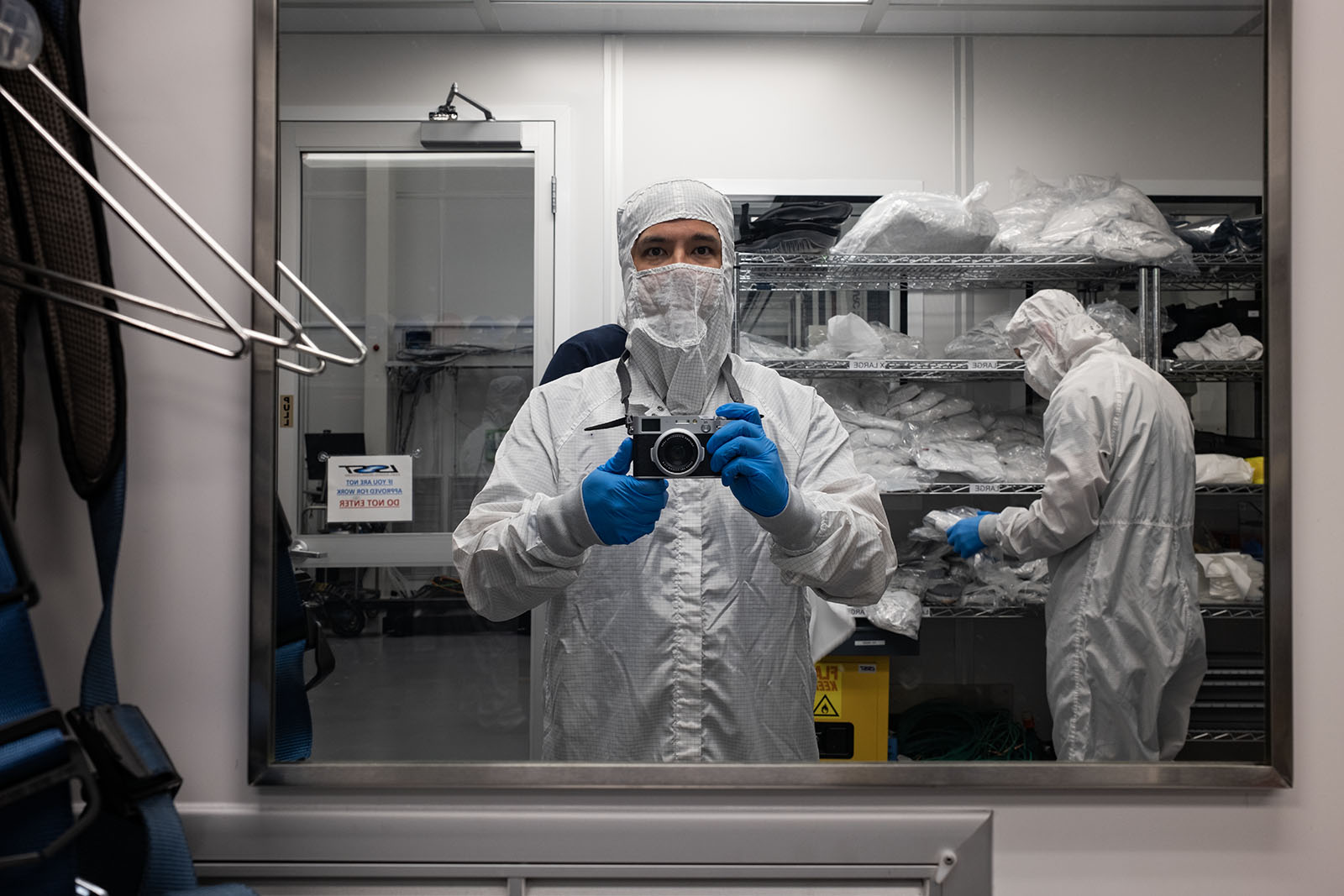
That is, briefly, the largest virtual digicam ever built. Earlier than it’s even put in into the observatory, which is huge, the digicam weighs a whopping 3,000 kilograms. This is similar to one,500 Nikon 58mm f/0.95 Noct lenses (Chris’s favourite weight conversion).

It’s so large on account of the large decision it’s able to shooting. The imager is made up of 21 rafts each and every of which holds 9 CCD sensors that make up the array. To present context, one unmarried sensor will {photograph} sufficient of the sky to include tens of hundreds of galaxies and stars at one time — and there are 189 provide.

Those sensors might handiest have about 16 megapixels of decision, however the pixels are a lot greater than the ones discovered on shopper cameras. Simply probably the most LSST’s sensor devices dwarfs the only discovered within the Hasselblad X2D 100C, probably the most highest-resolution medium-format virtual cameras these days to be had.

The CCD chips at the sensor are designed to be so delicate that ambient mild recording mild isn’t imaginable as it’s too saturated. Whilst establishing the LSST, a lot of sensors had been thrown out as they didn’t meet the important specs. As an example, the sensor needed to be inside 4 microns of absolute best flatness with the intention to go. As a reference, the human hair is on moderate 70 microns thick.
“One of the crucial primary technical demanding situations with assembling this digicam used to be putting in the sensor assemblies. I created a slew of ideas however didn’t really feel nice about any of them. So we ultimately had a brainstorming consultation and that ended in an concept I hadn’t considered,” Travis Lange, LSST Digital camera deputy challenge supervisor and digicam integration supervisor says.
“The remainder of the method concerned growing the detailed design with a large number of tolerance research to make sure the mechanism used to put in the sensors had the important accuracy.”


That flatness is completed the use of an array of ceramic carbon strengthened mounts in conjunction with 3 balls of various diameters to calibrate, blended with the technique to shim the sensors themselves. Remarkably, the machining paintings used to be so actual that obtaining virtually absolute best flatness used to be more straightforward than expected — probably the most few instances that may be stated of the digicam’s building.
Every sensor captures a 4,000 by means of 4,000 pixel house, with each and every pixel inside that being 10 microns in dimension. The diameter of the sensor house is 640mm throughout (about 25.2 inches) the more or less round array. Altogether, the LSST is able to shooting 3,200-megapixel pictures. The Subaru Telescope positioned on the Mauna Kea Observatory in Hawaii is the nearest in the past current digicam in relation to dimension as it’s only rather smaller bodily however has a sensor array this is more or less part the dimensions of the LSST.
To raised put what the LSST can do into standpoint, the animation beneath displays the way it compares to a couple different well known programs (courtesy of Margaux Lopez):
The sensor array operates at a temperature of -100 levels Celsius (thank you to an enormous refrigeration unit that may each warmth and funky to care for equilibrium) and, to steer clear of condensation, does so in an entire vacuum. Keeping up that vacuum is itself a problem, and closing 12 months a leak used to be found out that took the staff months to get to the bottom of.
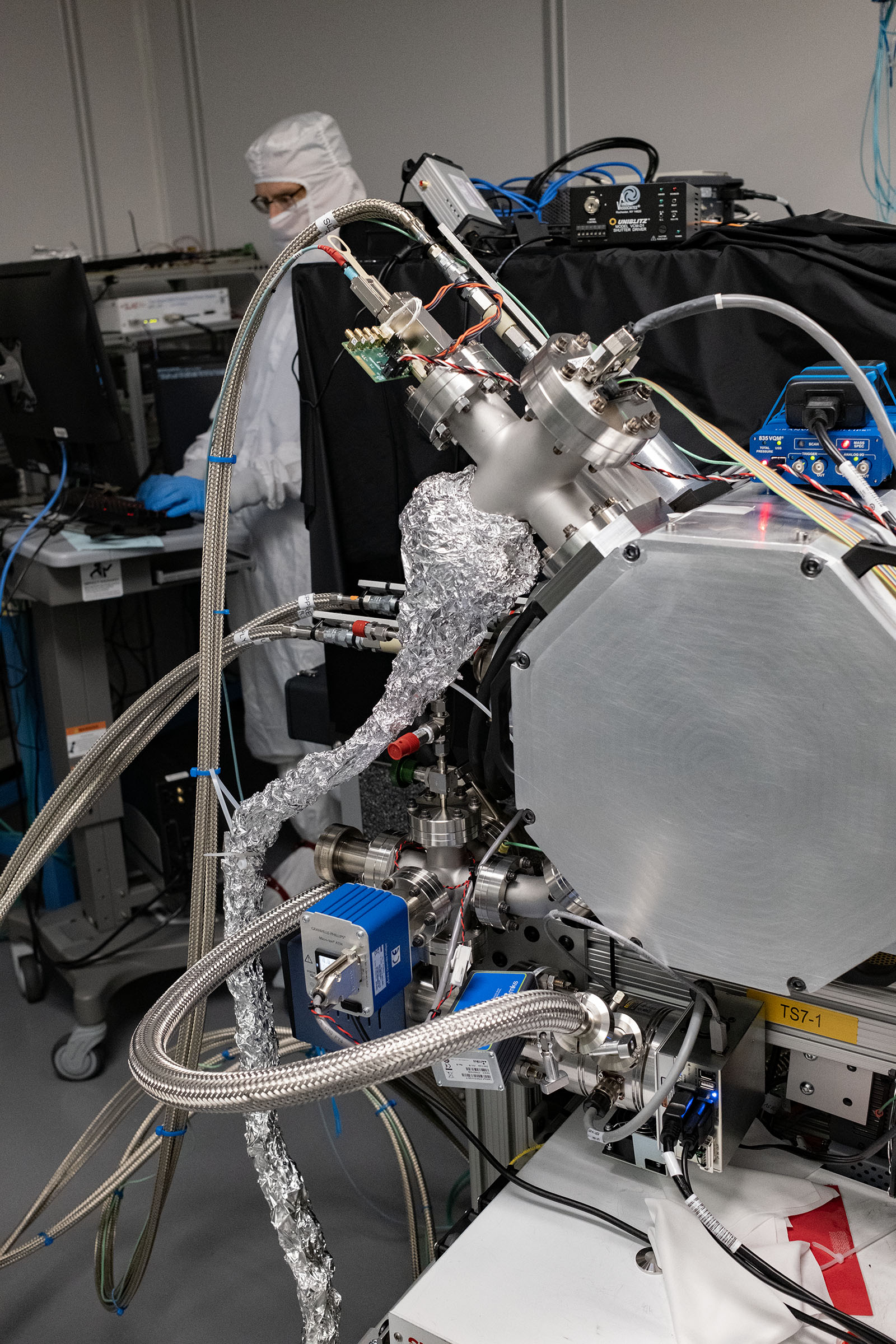
The sensor is handiest part of the equation, after all. The lens is not any much less spectacular, wearing a three.5-degree diameter box of view, which interprets to a couple of 7.5 instances wider box of view than the overall moon within the evening sky. It has an similar aperture of f/1.23 and the 1.55 meter diameter of the entrance part makes it the largest on the earth.
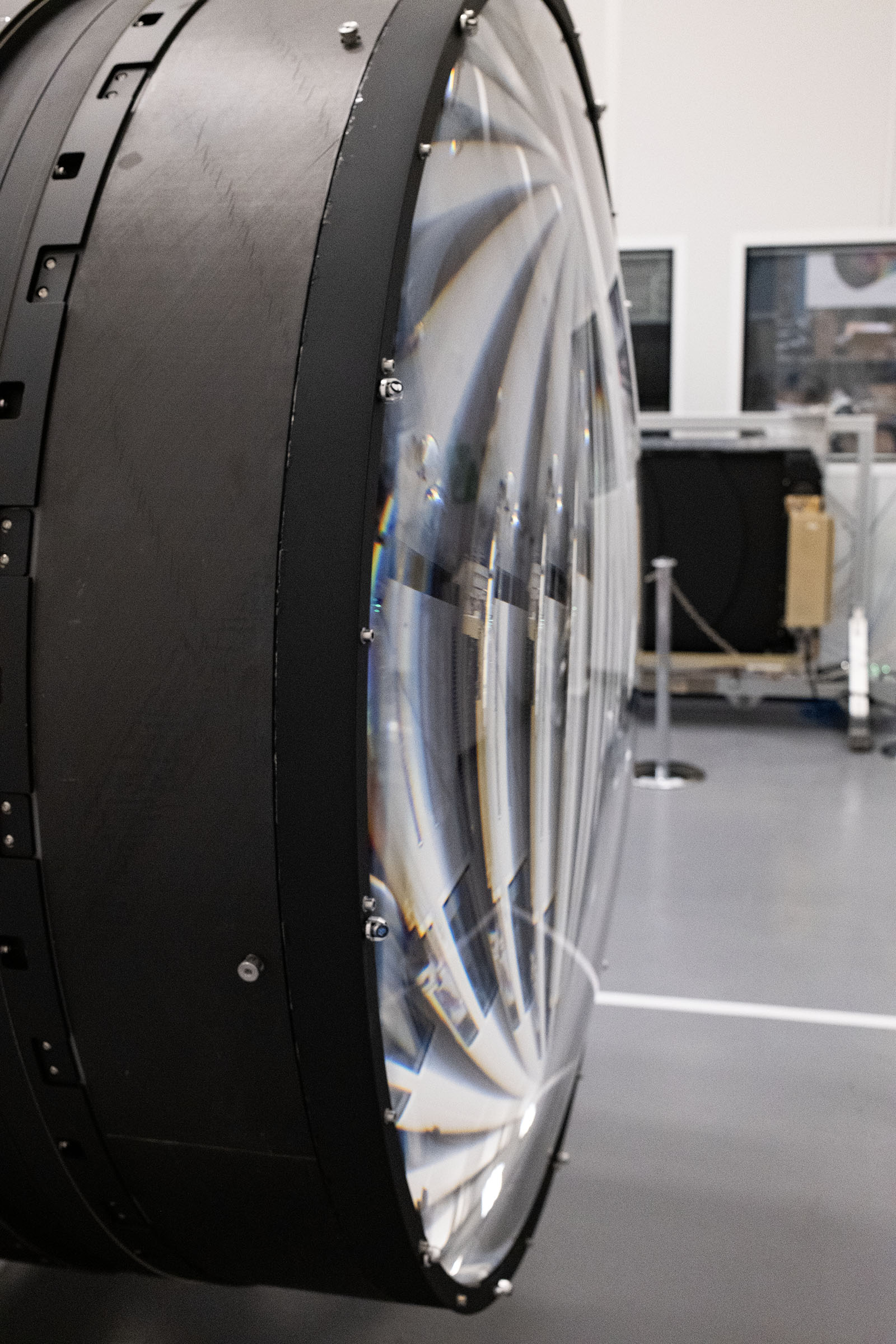
“I anticipated the method of putting in the huge lens meeting to be very tough as it has six separate ft which want to be connected concurrently. We made plans for 3 other folks to each and every set up two ft, and I believed managing that will be truly tough. However my paranoia used to be fortunately unfounded,” Lange says and issues to the photograph beneath appearing the method of set up.

Between the lens array and the sensor is an enormous mechanical shutter that may hearth as rapid as 0.9 seconds when the sensor is totally published. It might do a sliver shutter for sooner speeds (the place the 2 curtains are shut in combination and transfer around the aircraft of the sensor in unison) however nearly talking, an extended publicity of 15 to 30 seconds in step with shot is thought of as the “nominal vary” that can in truth be utilized by scientists.
The decision of this sensor is atypical. If it had been aimed within the approach of a standard digicam, it might get to the bottom of a golfing ball 15 miles away whilst additionally protecting a swath of the sky seven instances wider than the overall moon.
As large because the LSST is, it’s dwarfed by means of the dimensions of the overall observatory that used to be personalized for this virtual digicam machine. As you’ll be able to consider, this challenge took a gargantuan effort from an enormous selection of other folks.

“There were many engineering demanding situations and lots of setbacks however I feel one of the difficult issues for me individually has been how lengthy the challenge has long past on. I roughly anticipated to be onto one thing new by means of now, however I’m nonetheless running in this identical factor,” Margaux Lopez, a mechanical engineer at the LSST building staff, says.
“Since I set to work in this challenge in 2015 (my first engineering task after graduating from school), I’ve at all times been making plans to take a 12 months or two off to move frolic within the mountains after this challenge is over and I roughly concept I’d be doing that by means of now however seems I’m nonetheless right here and I now and again (ceaselessly?) surprise why. However I feel it’s in human nature to pursue discovery. The primary motive force of this whole challenge is interest,” she continues.

“Exploring the unknown, whether or not it’s a far off mountaintop or a far-away galaxy, is a basic human want. Running on a systematic tool that can assist us uncover extra about our previous and ourselves feels significant and thus definitely worth the decade of my lifestyles that I’ve devoted to it.”
Homeward Sure
Earlier than it will possibly do anything else, the LSST has to get from Stanford, California to the highest of a mountain in Chile. The digicam is terribly fragile, because of this distinctive delivery preparations are important. The LSST can be inserted right into a specifically designed delivery container this is equipped with surprise absorbers and sealed in opposition to dramatic adjustments in temperature. After that, it’ll be loaded onto a specifically chartered plane earlier than being moderately, and slowly, pushed up the mountain.
“There are many techniques by which we can have issues earlier than the digicam will get put in at the telescope, from injury right through delivery to a couple inaccessible part struggling early lifetime failure. We’ve run into a number of problems alongside the best way, and I’m certain we’ll come throughout others, however we have now a terrific team of devoted, clever individuals who have labored in combination to get to the bottom of many problems right through building,” Lange says.

“I’m maximum pleased with the delivery plan which I’ve put a large number of paintings into over the past 5 years,” Lopez provides.
“I’m assured we’ll be capable of get to the bottom of any long run problems that we come throughout. Dangers can’t be totally eradicated, however we will spend effort and time on minimizing them up to imaginable; therefore Margaux’s 5 years of incessantly creating the delivery plan!” Lange continues.

“I’m much less involved concerning the set up itself and just a little extra involved concerning the operation of the digicam after it’s put in. Now we have by no means operated the digicam at altitude or within the observatory stipulations with the telescope utilities and we’ve finished an overly thorough task of checking out as lots of the ones issues as we will forward of time (each with the commissioning digicam that we despatched to Chile early and by means of recreating summit stipulations within the lab at SLAC) however there are at all times going to be issues which can be sudden,” Lopez explains.
“That being stated, we’ve had a lot of issues pop up that we simply didn’t be expecting within the closing 12 months and we have now a shockingly succesful staff in position to react to anything else that is going mistaken. I don’t suppose it’s truthful to mention that issues received’t move mistaken however I do suppose it’s truthful to mention that we will repair or mitigate them briefly.”
The Undertaking of the LSST
The LSST can be used to discover the sky en masse, learning celestial our bodies and their courting with each and every different and the way they’re disbursed. It is going to additionally try to take on the mysteries of darkish subject and the way it’s disbursed all the way through the universe. Be expecting the detection of asteroids, their location, and their motion over the years.
Over the process the 10-year survey, the LSST will spend time shooting each and every a part of the southern sky greater than 800 instances which can permit scientists and astronomers to create an absolutely dynamic film of the universe. Necessarily, the LSST can be shooting a 10-year timelapse and all that knowledge can be to be had to the clinical group to additional the data of the universe.
Lopez says that one of the best ways she has discovered to explain the purpose of the LSST to the typical individual is that it is only looking to acquire as a lot knowledge as imaginable suddenly.

“I’ve discovered that this has a tendency to resonate: discovering anything else fascinating in house is very similar to discovering a needle in a haystack, so our purpose with this challenge isn’t essentially to straight away expect precisely the place the needles are or what sort of needles we may in finding, however as a substitute to assemble as many haystacks as we will to extend the percentages of discovering one thing new. The designs of this telescope and this digicam are concerned with accumulating a shockingly great amount of knowledge, and we’re certain to seek out some fascinating needles in a cosmic-sized haystack,” she says.
“I’m interested by what we’re going to seek out in our cosmic yard. The little cool animated film fashions of our sun machine do a disservice to how unbelievably huge it’s, and the way little we in truth know concerning the thousands and thousands of gadgets in it. Will probably the most gadgets within the Kuiper Belt or the Oort Cloud get reclassified as a planet? Perhaps!” Lange tells us.
“It might be great to find some extraterrestrial beings as a result of then expectantly other folks will forestall asking me whether or not we’re going to seek out extraterrestrial beings with this tool or now not,” Lopez says, guffawing.
“However extra realistically, I feel that there are probably phenomena in house that humankind hasn’t ever witnessed as a result of we’ve by no means been in a position to take photos at this intensity and presently scale earlier than, and discovering one thing that we’ve simply by no means noticed earlier than can be beautiful freaking cool.”
Symbol credit: Until in a different way famous, pictures by means of Jaron Schneider for PetaPixel