
In certainly one of her most famed quotes, the photographer Dorothea Lange mentioned that “the digital camera is an tool that teaches folks learn how to see with out a digital camera.”
As of late, within the age of social media and algorithms, the virtual international intersects with the actual one. Guy is generating huge quantities of pictures via cameras, we’re taught via their use learn how to see with out a digital camera, and but we proportion our imaginative and prescient and notice via monitors.
It’s a abnormal time we are living in for side road pictures.
In this day and age that it’s experiencing its largest growth, it is usually going through critical boundaries. In quite a few international locations, basically within the West and the North, increasingly more strict limits are being put on how it may be practiced.
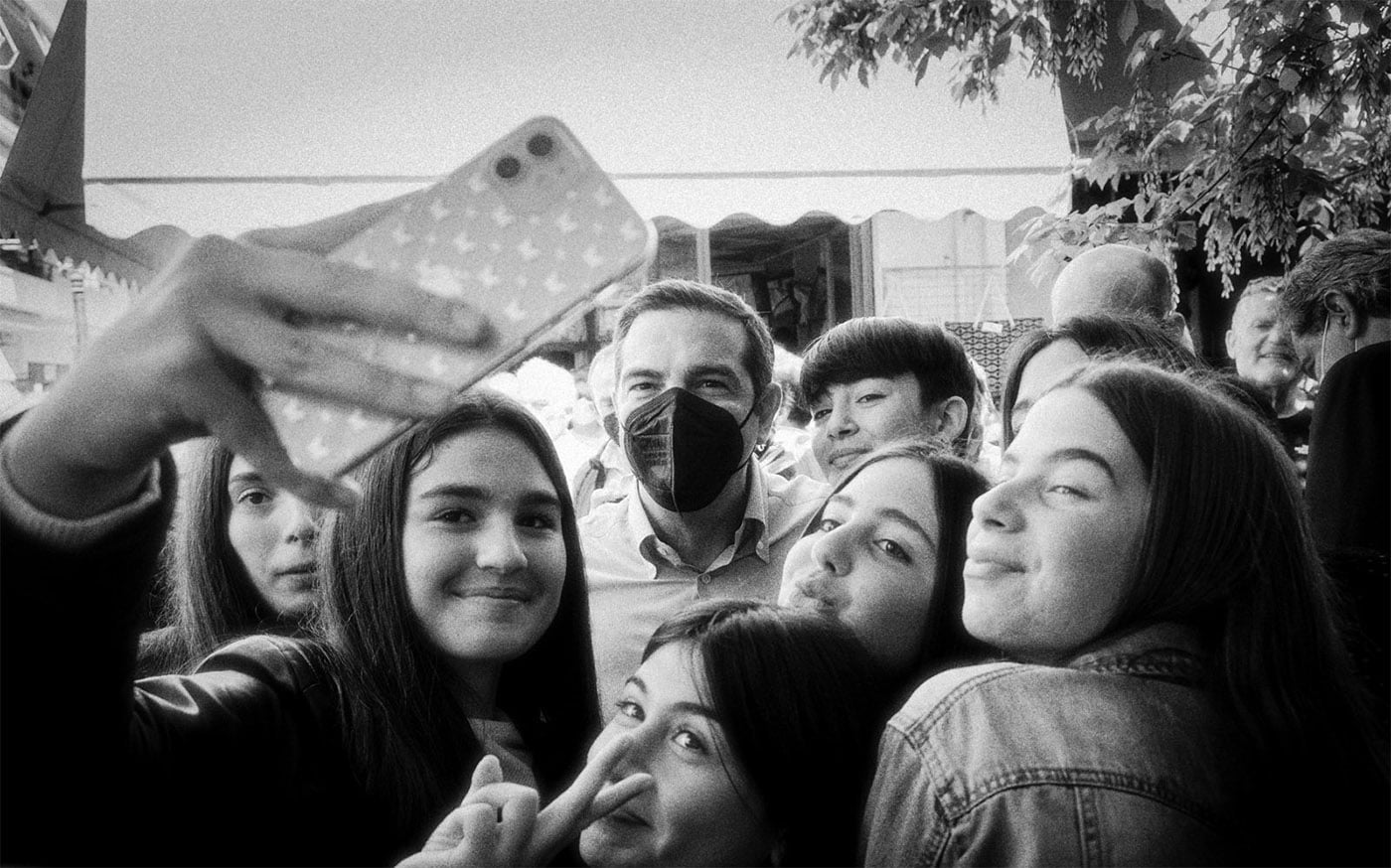
The virtual cameras and cellphones that experience made pictures out there to everybody, in addition to the convenience of distribution of the fabric produced via particular platforms and social media, and the sense that the practitioner of side road pictures — alternatively badly they do it — is an artist, has resulted in an explosion of passion and a big build up within the choice of side road photographers. It fuels a marketplace consisting of specialist magazines, organizations that specialize in working competitions, to photographic firms generating specialist cameras and kit for side road photographers.
However on the similar time, the other could also be taking place: individuals are expressing their anger about side road pictures!
On social media, the place photographers proportion their subject matter, many of us who uncover side road pictures for the primary time are stunned. They really feel unprotected in entrance of cameras and now acknowledge the presence of photographers at the streets as a threat. They understand that at any second they themselves may also be the topic of {a photograph} by means of a excellent or unhealthy photographer, with no need given their consent or having any keep watch over over how their symbol is recorded. They really feel that their privateness is being violated. They usually turn out to be increasingly more offended.
Proper to Privateness and Side road Images: Parallel Marches
The privateness debate isn’t new. It’s as outdated as side road pictures.
In 1890, round the similar time side road pictures started, in an editorial within the Harvard Regulation Overview, Pass judgement on Louis Brandeis and Professor Samuel Warren referred to the “Proper to Privateness.”
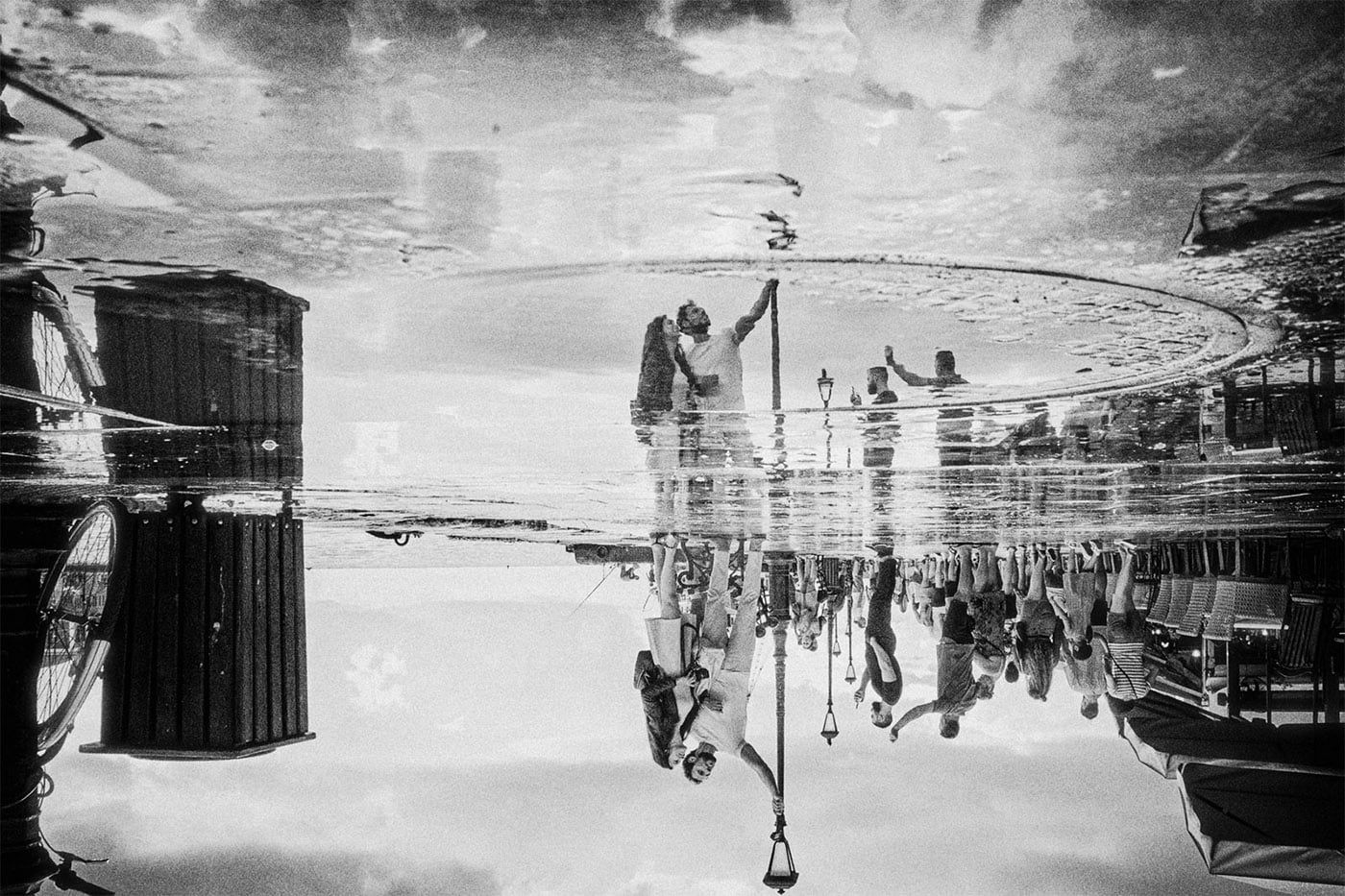
Within the article, the legislation is identified as an ever-evolving made of political, social, and financial adjustments that create the will for brand new rights.
A explanation why for writing the object at the “proper to privateness” used to be partially because of tendencies in photographic generation:
“Earlier than 1884, cameras have been giant, dear. They weren’t simple to move from one position to any other and required those that have been the topics of the images to stay immobile for lengthy sessions of time with a view to seize their shape.”
However in 1884, the Eastman Kodak Corporate created the primary transportable digital camera: an reasonably priced, simply transportable digital camera that might take many footage of folks in public with out the will for them to sit down nonetheless.
With the appearance of latest generation and the rising acclaim for tabloid tabloids, Warren and Brandeis expressed their concern that pictures threatened the “proper to not be disturbed.”
“Fast images and the click trade have invaded the sacred precincts of personal and home existence. A lot of mechanical units threaten to make sure the prediction that ‘what’s whispered within the closet will leak from the rooftops’.”
The Loss of Visibility as Freedom
Alternatively, the privateness debate didn’t forestall side road pictures from flourishing.
At a time when towns have been rising hastily, across the newly created city facilities of the economic revolution and the smoking chimneys, a colourful, working-class tradition used to be arising at its core.
The photographers of that generation had nice tales to proportion and a brand new medium to relate them. They have been there to seize folks’s agonies, feelings in all their depth, the everydayness that made existence significant on this wondrous, new, commercial international.
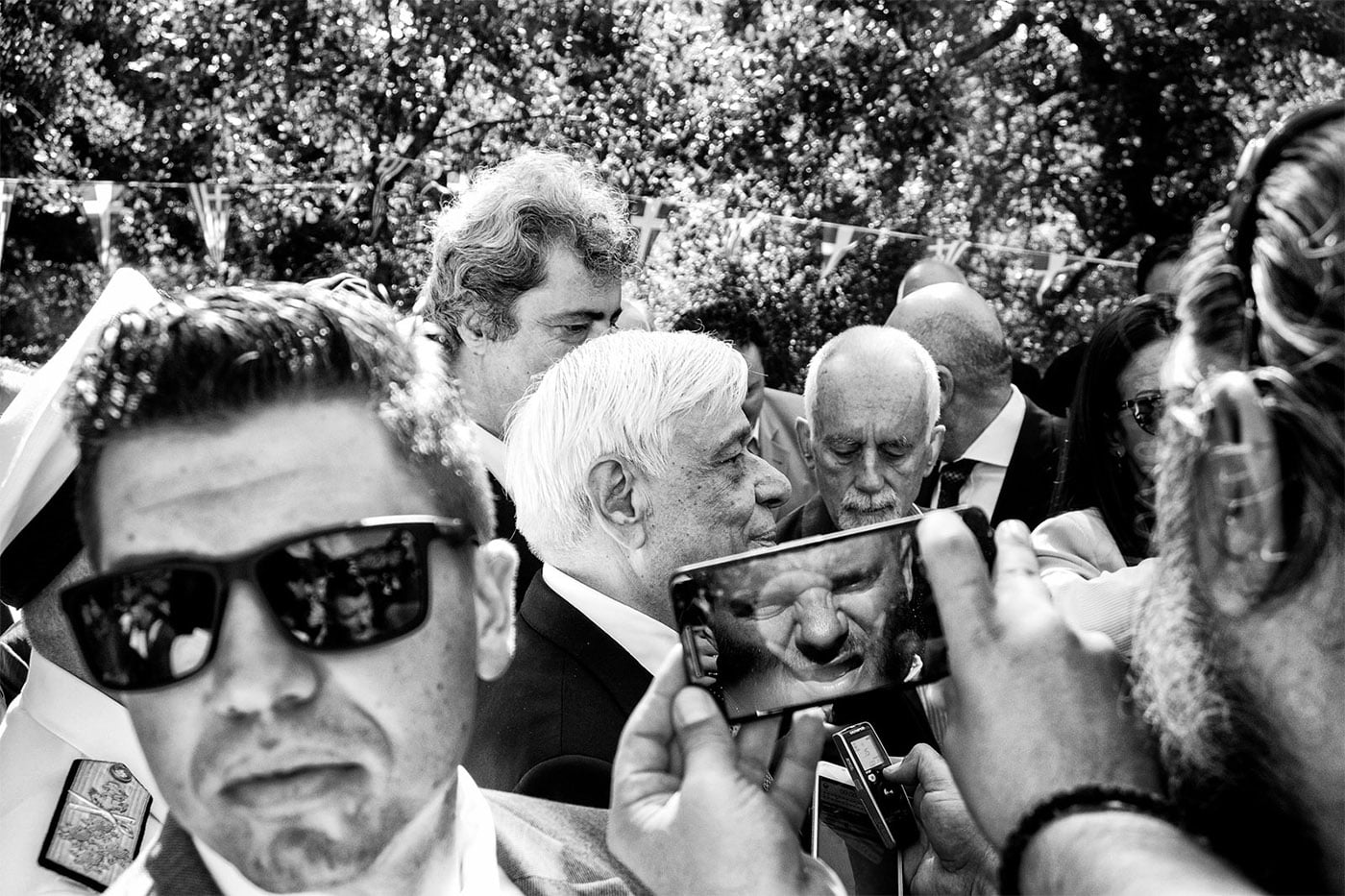
As a style, side road pictures captured the true occasions: the real face of a brand new generation. As such, it used to be a lot nearer to documentary pictures and photojournalism.
And whilst the privateness debate will have been at the leading edge and feature similarities to the only underway lately, the reality used to be that the proper to anonymity gave the impression smartly secure.
It used to be an excessively other time. A type of variations, now not essentially the most insignificant, used to be the loss of visibility. The loss of visibility, paradoxical as it should sound, ensured that side road photographers had plentiful freedom of motion.
Images remained most commonly hidden in picture albums tucked away in drawers and closets. If a photographer won any better reputation, their subject matter can be featured in a newspaper, mag or gallery, however this visibility used to be surely restricted in comparison to lately.
The best to anonymity gave the impression secure because it used to be a lot more tricky to attach the picture of an individual photographed in public with the actual individual in the back of him.
Additionally, the choice of side road photographers used to be a lot decrease, cameras have been a lot more dear and pictures, subsequently, used to be a lot more uncommon and subsequently precious. Folks weren’t afraid of getting their {photograph} captured by means of a stranger. Actually, many sought it out.
As of late, issues have modified enormously. Somebody can declare to be a side road photographer so long as they have got a recording tool, even an affordable cell phone.
On Instagram specialised accounts for side road pictures have many masses of hundreds of fans. Greater than 3.2 billion footage are shared on social media day by day. Of those, many tens of thousands and thousands are side road footage. No longer they all are similarly excellent.

Plus, folks know that the fabric a side road photographer will proportion on their social media accounts is their very own existence, even the only they want to stay hidden. And it might probably pass viral.
On the similar time, new facial reputation applied sciences via e.g. methods like pimeyes.com can hyperlink an individual’s symbol within the public sphere to genuine knowledge round them as they exist, e.g., in non-public accounts, within the virtual personas we create to provide ourselves on social media. Side road pictures is now not only a report of truth from an artist’s standpoint. It can’t adequately make sure that the anonymity of people.
Numerous problems subsequently get up for the photographer who’s requested to stroll the high-quality line between shooting truth and violating privateness.
Privateness within the Age of Social Media
However what’s privateness within the age of social media? Is it the similar idea because it used to be 130 years in the past, or has it too advanced because of the ever-increasing affect of latest applied sciences?
Mark Zuckerberg in a speech on the Crunchie Awards in 2014 had said — comfortably sufficient for him, albeit with a big dose of reality — that the appearance of social media has modified the which means of privateness. He mentioned:
“Folks now not have any expectation of privateness, it’s now not a social norm. Folks really feel relaxed now not handiest sharing additional information and other varieties of data, but additionally extra overtly and with extra folks.”
With the upward thrust of social media, voters/customers — customers — have turn out to be content material manufacturers on a large scale. They supply details about the places they’re in, publish footage, movies and biographical data, steadily enriching this knowledge with non-public ideas in textual content shape that delve deeper into the fabric they’re sharing.

This knowledge is then labeled in some way that makes it simple to be found out by means of others.
They mix bits and items in their lives right into a sparsely built and sophisticated virtual personality.
This projected personality is evaluated day by day: patterns are known in the best way it’s introduced: It draws the eye of alternative customers and is judged at the foundation of the recognition it achieves.
Necessarily, posting subject matter on social media is a way to relate our lives: What we inform ourselves our existence is. What we would like others to assume is our existence.
In the long run, the strains between what we need to painting as our existence and what our existence in point of fact is turn out to be blurred.
The social media neighborhood is one the place individuals are continuously competing with every different to get the eye of others. This is a neighborhood that creates a necessity for its individuals to continuously produce and proportion subject matter. A necessity this is fueled by means of social media giants whose good fortune depends upon producing large quantities of knowledge. Information that permits them via its processing to make a hit predictions, which is the supply in their large profitability.
The “finish of privateness” as we knew it comes on the time of the “finish of the power to fail to remember.” The ideas we proportion on-line “has the possible” to exist perpetually.
The mix of those two problems — our transformation into content material manufacturers and the chance that the fabric posted will exist perpetually — is converting the best way we outline private and non-private.
Turning Ourselves Right into a Emblem
Knowledge posted to stick perpetually turns into items of a puzzle that disclose the virtual self, whose life has real-life implications.
A consumer’s virtual identification can be utilized by means of a potential employer within the hiring resolution procedure, used as proof in a lawsuit, utilized by individuals who intend to motive damage.
A presence on social media — LinkedIn, Instagram, Fb or Twitter — is turning into for an increasingly more massive a part of the inhabitants an integral a part of getting and conserving a role.

The “purest” instance of that is the influencer, whose complete supply of source of revenue is presenting themselves on-line and reaching recognition.
However social media could also be the medium during which many “wisdom employees” — i.e. employees who manipulate, procedure or make sense of knowledge — advertise themselves and construct their emblem.
Reporters use Twitter to be told about different tales, however additionally they use it to increase a non-public emblem and an target audience that may be tapped.
Folks use LinkedIn now not just for resumes and networking, but additionally to publish articles that authenticate their character (their emblem) as managers or marketers.
And we, as photographers, rely at the virtual personality we construct. We’re beneath a drive to continuously provide new subject matter via our social media accounts. We’re punished by means of the set of rules if the ratio isn’t enough. We produce extra subject matter that “works higher” on Instagram, footage made to be considered in the course of the small monitors of cellphones. We publish them in some way and order that visually satisfies the senses. We attempt to stay the eye of alternative customers on us up to imaginable in an international the place consideration is a treasured restricted useful resource for which pageant is continuously intensifying.
We search the best imaginable visibility. We chase virality.
An increasing number of, we learn how to act as though we’re celebrities, personas in some Large Brother display whose good fortune depends upon the eye and love of the target audience. We rely on likes.
The Kardashians are the personification of a definite entire dominant philosophy, in keeping with which somebody can prevail so long as they’re “appreciated,” so long as their presence creates passion. So long as he’s common sufficient.
The phrase “branding” is ideally fitted to what’s taking place, because it emphasizes what the self turns into: a product.
On the similar time, the upward thrust of smartphones makes it imaginable to supply subject matter 24 hours an afternoon.
Within the early days of Fb, a consumer needed to take footage with a virtual digital camera, add them to a pc, and publish them to albums. Now, the telephone I’ve in my palms is an advanced digital camera, at all times able to seize each and every side of existence.
Systems on smartphones make picture and video modifying fast and simple in some way we couldn’t have imagined till a couple of years in the past. This will increase the consumer’s skill to offer consistent updates to their social media accounts and makes it more straightforward to supply subject matter to construct the logo this is themselves.
On this context, the lives of an enormous choice of folks rely on their social media symbol and the footage they publish, and controlling that symbol turns into the most important.
The virtual self has energy over the actual self.

The Guy in Entrance of the Lonely Displays
All this at a time when we are living increasingly in entrance of monitors and not more with folks.
As of late, a median individual spends a median of 6 hours and 37 mins each day in entrance of a display. The corresponding numbers for Gen Z (born between 1996 and 2010) are even worse: they spend over 9 hours an afternoon in entrance of monitors.
Folks spend 44% in their time when they’re wakeful in entrance of monitors. Nearly all of this time (3 hours and 46 mins) is spent in entrance of cellphones.
We’re increasingly more judging folks in keeping with what we see about their lives via monitors, now not the conversation we now have with them in the actual international. We make selections about folks in keeping with our impressions in their virtual personas as we see them unfolding at the platforms of tech giants in entrance of monitors.
On the similar time, the extra time we spend in entrance of monitors, the extra lonely we really feel.
In line with a up to date survey by means of Cigna, more youthful individuals are those that suffer essentially the most from loneliness.
Since 2012, in each the U.S. and the U.Okay., charges of melancholy amongst youngsters have began to upward thrust. By means of 2019 — even prior to the COVID-19 pandemic hit — that they had doubled. An increasing number of teenagers around the globe mentioned they felt lonely and as outsiders in school. This wasn’t simply because youngsters have been much more likely to confess to damaging emotions — behaviors connected to deficient psychological well being, corresponding to self-harm and suicide makes an attempt, additionally higher round the similar time.
The reason for those traits seems to be connected to smartphone use.
From 2012 onward, extra folks began the use of smartphones and have been on social media for a number of hours an afternoon. On the similar time, teenagers additionally started spending much less time with their pals in individual whilst dozing much less time.

The next knowledge also are standard:
Era Z, the era that spends essentially the most time in entrance of monitors to be in contact, is the loneliest era. The generations over 72 are those who’re least lonely.
This can be a reversal of the truth that used to be true till a couple of years in the past, when the issue of loneliness used to be basically associated with older folks.
The picture of the self that turns into an alienation issue.
In line with the top of the psychiatric hospital at Texas Youngsters’s Health facility, Dr. Laurel Williams:
“The sense of neighborhood ceases to exist. We spend much more time in entrance of monitors slightly than speaking to people. But when there’s no neighborhood to show to, then the sensation of hopelessness has nowhere to head.”
Concern is even prevalent in opposition to the self who’s continuously beneath self-evaluation and at all times unearths himself underserved. Not able to make the proper selections, not able to unfastened himself from bondage.
What the self is is at all times against what it must be, the self is against the “very best self”, this “true self” that will have to be liberated with a view to succeed in person happiness, person good fortune.
The person learns to are living in a perpetual provide. It initiatives idealized types of the self via social media accounts, which don’t correspond to what it’s. He communicates extra via them. He depends upon them.

A herbal result of this procedure is low vanity that doesn’t permit the self to be “beloved” and exacerbates the seek for that which is able to permit “love”.
The “answer” is at all times sought on the person degree.
Famend social psychologist Sherry Turkle notes that there’s something very anxious about our instances. Sooner or later, the person reaches some degree that the self envies the fabricated symbol of the self this is projected on social media:
“We see the lives we now have built digitally the place we handiest display the most productive of ourselves, and we understand that our genuine lives are a ways from the lives we inform others we live.
We see the self we now have built as an Different and really feel not as good as it. We envy him as a result of we can’t be like him. This creates a way of self-envy this is deeply alienating.”
We really feel inauthentic, hypocritical, accountable, we hate our personal avatars — the idealized variations of ourselves — which we will by no means succeed in. We hate the sparsely built emblem that has turn out to be our self.
We’re emotionally connected to them as a result of we now have invested time and effort in growing them. They take keep watch over of our lives.
The picture of the self turns into an agent of oppression, like an inverted portrait of Dorian Grey wherein the protagonist will have to at all times reflect the false and flawless. It reminds him that the acceptance he receives is for what he by no means in point of fact used to be and will by no means be.
Actually, the one ones who in point of fact see our true selves in the back of the manufactured facade are the corporations that form the structure the place virtual personas are deployed, accumulate and find out about the information of our life, categorize it, establish patterns of conduct that they then use to enhance their predictive fashions which can be the supply in their large earnings.
The age of selfies, the age the place we proportion images of each and every side of our lives, the place we really feel the sort of nice want to give protection to our symbol, that we voluntarily abolish our privateness and but we need to have keep watch over over how we provide ourselves on social media — as a result of this has an actual have an effect on on our lives, as a result of we increasingly more be in contact via virtual personas — could also be a lonely age: it’s the age of envy. Envy of others but additionally of our personal flawless portrait of ourselves that we attempt to undertaking and which in the end turns into an element of alienation.

The Truth of Side road Images Towards Digital Truth
In the sort of context, side road pictures, in spite of working in and flourishing via the similar international, is a threat.
Within the age of filters that modify the form of faces, of people seeking to get nearer to the perfect filtered model of themselves, that many of us select and opt for cosmetic surgery seeking to resemble the flawless filtered variations of themselves as projected on social media, side road pictures that captures the imperfections of truth, that doesn’t essentially seize “the most productive model of the self” however steadily the worst, the sorrowful, the skeptical, the annoyed, is an enemy.
This is a stone that may fall at the reflect of the (flawless or no less than selectively worn and subsequently “true”) symbol of the self that we sparsely assemble and crack it. It’s identified as a contravention now not of privateness however of the power to give protection to our emblem of self — its financial worth — by means of keeping up keep watch over of our symbol.
This can be a time when black cats don’t seem to be murdered as they have been within the Center Ages, however stay unclaimed in animal shelters and are euthanized as a result of they don’t seem to be sufficient “selfie-friendly.” They die as a result of they don’t “write” excellent on cameras.
Side road pictures does now not flatter, it does now not essentially display the most productive model of ourselves, it presentations what we’re at a specific second beneath the gaze of any other. And for a side road photographer, a black cat — the sides of ourselves that don’t flatter us — could be a very fascinating matter to {photograph}.
Pre-Images As a ‘Answer’ to the Downside of Privateness
It is crucial right here to show traits which can be additionally bobbing up that oppose side road pictures or supply a “answer” to the issue it poses. One such is the proliferation of generative artwork types of synthetic intelligence. Promptography is gaining a rising recognition with the fabric produced fooling even skilled photographers. Activates are verbal nudges in a particular route of synthetic intelligence to create a picture that resembles truth.
Prompting supplies a “answer” to the issue of privateness and anonymity since what’s being recorded — even supposing it should seize a picture we now have come to spot with side road pictures — does now not in reality exist. But it surely appears to be like extra spectacular than the actual factor.
Already, side road pictures accounts on social media are posting such creations. Nearly all of customers can’t inform the actual from the faux and as the result’s so spectacular, many of those posts get an excessively prime reaction. They pass viral. Those pictures seize a truth that doesn’t exist or if it does exist it is extremely hardly captured in the best way it’s captured within the symbol created by means of the set of rules.
Within the majority of instances, it’s not said that what is gifted is the results of mathematical equations translated into a picture by means of algorithms, and the affect is left that they’re genuine images taken in the street.

A Global That Is Turning into An increasing number of Tricky to Conceive
An additional factor that arises from the emergence of pictures is that genuine images now appear a lot more unusual and not more spectacular. Truth is now not “appreciated” sufficient.
However even footage which can be extraordinarily spectacular, customers in finding themselves ready of wondering whether or not they’re in reality genuine or whether or not they’re the results of synthetic intelligence.
It is rather tricky and uncommon for a photographer to be in entrance of a in reality distinctive second. Even rarer is to seize it. He will have to have advanced his craft and feature the ability to understand what he sees, to be in the proper position on the proper time, on the proper attitude, with the proper gentle, to press the button on the proper cut up 2d. No longer a fragment later or previous as a result of another way he will be unable to uniquely seize what’s happening.
For an set of rules, a lot of these prerequisites are needless.
An set of rules with a sequence of suitable activates can produce such pictures on a mass scale at any time on the push of a button.
A photographer can spend a few years growing his artwork. However all of this procedure related together with his building and his character, the data he has won, the ability he has advanced, is put to the aspect of the passion of people whose consideration is now grew to become to any other symbol produced as a result of somebody, most certainly with very little revel in within the artwork of pictures, wrote a word on a bar, on a pc, and pressed “input.”
The uncommon and distinctive turns into trivial.
Within the context of an financial system of consideration, the fabric of nearly all of photographers is at risk of being marginalized.
Clearly, the sort of building is especially disheartening for younger photographers whose artwork has now not but advanced.
However it should end up extra problematic for the artwork of pictures itself. What emerges is that the person who is thrown out of the creative procedure is the artist himself. The individual is not noted of the image, each as the person who as a photographer captures what is going on and as the person who is the topic being captured.
The digital dominates.
The synthetic is known with the ordinary, the out of this international, the actual with the unusual.
The bounds of genuine and faux are blurred to such an extent that now all that issues is how environment friendly the fabric introduced does inside a social media structure. Actually, we’re rapid drawing near the purpose the place we can want the middleman of machines to acknowledge what’s genuine. We can have misplaced believe in our senses. We’re “hacking” the human skill to understand truth.
The true threat is that the creative creations that may dominate our international within the close to long term may not be the results of the creativeness or imaginative and prescient of people, however of machines that might be fed by means of earlier creations of people however increasingly more by means of the creations they themselves create.
From digital intercourse — intercourse with out the chance of touch — to A.I. partners — companionship as a shopper product, adapted to the wishes of the person, with out the inevitable issues of human relationships, to promptography — pictures that simulate pictures however with out genuine folks — we are living within the age of simulation. However what’s misplaced is the adventure that guy will have to take to overcome one thing. The artist isn’t just his paintings, but additionally his adventure till he arrives to supply it.
The query that arises is: If all that will subject is the vacation spot and now not the adventure to get there, what tales would our ultra-modern Ulysses need to proportion?
What sort of reminiscence would he have left in the back of?

The Wish to Deliver Guy Again to the Vanguard
On this newly wondrous digital international, recording truth because it in point of fact is, via the person eyes of genuine folks, even supposing identified by means of many as a threat, is in truth turning into a need.
We want side road pictures to get a real image of an international this is turning into increasingly more tricky to understand, hidden in the back of filters, wherein it’s turning into increasingly more tricky to split the substitute from the actual. A global wherein the substitute turns out extra genuine than the actual. Steadily extra fascinating.
Within the dystopia of the now increasingly more close to long term, the road photographer sheds gentle at the darkness. He depends upon gentle and color to seize what’s genuine, versus filtered variations of the self and algorithmic pictures that experience not anything to do with gentle or darkness, however with arithmetic and deception.
At the moment, restrictions in many nations are rising and side road photographers are being focused. They’re adapting their taste. They’re increasingly more choosing the play of shadows with gentle, silhouettes, hidden faces and expressions, as though to seize on this means a depressing age wherein Guy is put on a bizarre margin.
We stay increasingly distance from Guy. Concern prevails and side road pictures, with the selections made by means of the photographers, mirrors this concern. The expansion of this kind of pictures will in the end have succeeded in shooting one thing especially true of our time: the superiority of concern of Guy, the distancing from him.
Aurelie Filippetti, Minister of Tradition between 2012-2014 in France all the way through the length when the rustic used to be dominated by means of the Social Democrat François Hollande, had said that the constraints put on side road photographers are unacceptable as a result of “with out them, our society has no face.”
She added: “We possibility dropping our reminiscence.”

However reminiscence is the cohesive material of societies, even if we be mindful issues we would possibly need to fail to remember.
Allow us to assume once more.
Is that this the tale we need to inform about our time to long term generations?
A tale wherein shadows, virtual personas, and projection dominate and the actual individual is absent? The place Cartier-Bresson or Josef Koudelka would don’t have any position?
Is that this the bottom on which we need to construct the way forward for our societies? A long term with out reminiscence?
Images is now not the privilege of a make a choice few, artists or pros, however increasingly more a possibility for all.
The technological revolution happening has introduced pictures to the middle of our leading-edge international and we now have to select what to do with it. We will be able to flip the digital camera in opposition to ourselves. However we will flip it outwards, in opposition to the sweetness that’s the international we are living in even if issues get unsightly.
It’s a possibility to turn out to be higher storytellers. Of genuine tales. And our tales may also be roughly true.
It’s as much as us.
As a result of, as Henri Cartier-Bresson mentioned, pictures is the popularity, in a cut up 2d, of the importance of an match.
What’s in point of fact taking place?
As a result of, in spite of everything, guy wishes tales to proportion. Tales that give which means to our lives. Which might be price sharing. Our very life depends upon them.
It’s a need.

Concerning the Writer: Giannis Angelakis is a side road – documentary photographer and a journalist from Chania, Crete. He used to be born in 1979 and has lived maximum of his existence in Greece. He used to be a Fuji X Ambassador from 2018 to 2024.
Symbol credit: All footage by means of Giannis Angelakis